
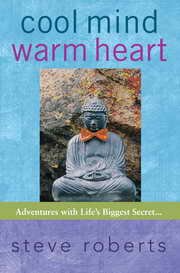
Cool Mind Warm Heart
Adventures With Life's Biggest Secret
The Book:
|
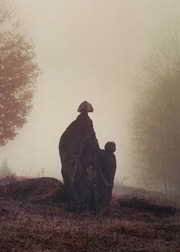
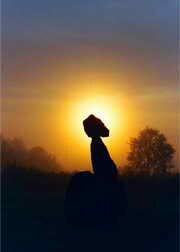
Cool Mind Warm Heart is a classic in the spirit of Be Here Now and The Lazy Man's Guide to Enlightenment...playful, kind, fiery and deep—a collection of essays, stories and photos of stone sculptures. If the Dalai Lama married Tom Robbins, their love child might create this book—a celebration of the most inspiring (and terrifying) possibility the world has ever known: Everything is a Gift. |
Some Reviews:
|
Humor and spiritual reflection aren't usually fellow travelers. Yet for every aha! moment in Cool Mind Warm Heart there is a corresponding chuckle or outright hoot. Its paradoxical essays like "Why I Love Alzheimer's," "Ruthless Saints" and "I Am a Terrorist" grab our archives of conventional wisdom and turn them upside down. Steve Roberts is the rare and honest friend who has the courage to look you in the face and call you on your act, but with a grace that makes you say, "I guess I knew that all along." - Robert F. Miller I was drawn to open this book the other morning as I sat to meditate, and randomly opened it. The chapter I chose drew me in without hesitation. In just 10 minutes that morning, my entire world opened to new possibilities, new dimensions, and most importantly, a new level of love, compassion, and what unconditional love really is. Thank you Steve, you've helped open my heart by sharing your gift!!! |
|
The Introduction From The Book:
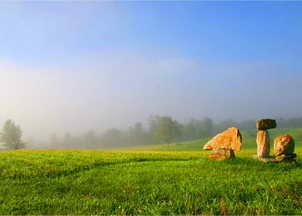
Okay, so God sits down next to you and says, “It’s your lucky day, my friend. I’ve come to tell you the secret of life.” What, in your view, will God say next? If there is a right answer to this question, it’s beyond me. But I do feel that each of us has our own answer. After all, we make countless decisions every day based upon what we believe is real. Why else are we killing each other with such gusto in the name of righteousness? Why else do we get into spit-flying verbal fisticuffs over whether some movie or sports team is good or bad? Why else do I have a friend who swears that peanut butter prevents cancer? To put it rather grandly, each of us has our own view of how the universe operates. Like everyone else, I have theories about things, lots of things. Theories, as you know, are just stories, things we make up to try and understand what’s going on. One of my stories is that located at the core of our ego nature is a basic assumption we’ve latched onto that defines every choice we make. This assumption acts like a compass, ever orienting our fabrication of life. It also acts like a radio beacon—beep, beep, beep—and is therefore the overriding message we communicate to all we encounter. We may think we’re expounding upon life, liberty and the pursuit of horse sense, or discussing why green eggs and ham is the world’s best breakfast, or explaining how to master a fly fisher’s flick of the wrist, but what we’re really doing, moment by moment, is broadcasting our fundamental take on the secret of life. Such as: If you screw up, you’re dead meat. God is always opening His hand. You can never be too careful. Things always turn out for the best. We’re all victims of circumstances beyond our control. And so on. Why mention this? It seems that any book with such an ambitious title as Cool Mind Warm Heart (the term Huston Smith used to describe the quintessence of the Buddha) ought to at least nod in the direction of life’s master principle. So here’s my answer, my best shot at the secret the God of my imagination is hiding up Her sleeve: Everything is a gift. Don’t get me wrong. I’m not saying that an impending nuclear holocaust is reason to throw a luau (though, I must admit, that would be a healthier response than most, especially if what we’re celebrating is beauty in the face of death). Of course pain and loss are real. The question is, what’s their purpose? What’s the purpose of everything? My story is that every heartbreak, every joy, every moment, every circumstance is the universe calling us to open ourselves to the boundless love that is the essential vibration of existence. Robin Williams says that cocaine is God’s way of telling us we have too much money. The spirit of that quip carries a lot of truth, in my experience. The universe is always talking to us, always encouraging us to make healthy choices, choices that serve our heart’s desire for joy, or as a monk friend of mine calls it—“happiness on demand.” As I see it, the blessing of addiction—whether our drug is cocaine or saving the world or hating people who’ve never been to a NASCAR race—is that it shows us the kinds of choices that won’t get us where we want to go. Pain, to me, is not punishment. Pain is the universe saying, “No, no, my child. Make another choice. You are much bigger than this. You are divine. Ultimately, you can make room for everything.” Making room is the practice of growing compassion. I doubt anything has been more difficult for me, maybe for anyone, given the horror we all experience personally and witness in the lives of others. And yet, for example, here’s the Dalai Lama who considers many Chinese leaders to be among his most important teachers in this lifetime despite their intention to destroy the Tibetan people—an intention that has been carried out for decades through systematic murder, degradation, imprisonment and the imposition of inhumane laws. We may smile at the Jewish proverb “Love thy neighbor, even when he plays the trombone,” but we know that to apply its deepest meaning takes almost inconceivable courage and commitment. And that is precisely its gift. Our elders remind us that growing old isn’t for sissies, but is there a moment after conception when we’re not growing old? Some say it takes a million incarnations to become fully enlightened—to live in conscious union with all of existence. Believe it or not, I’d say many of us are well on our way. My story is that for most of those million incarnations, we live in a manner that is little more than the equivalent of smashing our head against a brick wall. Then, along about life 900,000, give or take, we begin to realize that we’re ending each incarnation with a massive headache. “Hey, what’s the deal?” we say. “There’s got to be more than this.” With that, things start to shift. Sure, we still make insane choices, like blaming others for our anguish or deciding we’re unworthy of happiness. But somewhere in us is this growing awareness that life’s greatest gift is the gift of choice, and that our most important choice is love or fear. Admittedly, it’s a choice that can take a while to get the knack of. A hundred thousand lives, say. Yet all the while we’re becoming more aware that life is a lot simpler than we had ever imagined. For one thing, we discover we don’t need to change a thing—not others, and not us. All we need to do is love. As I’m writing this, the remarkable Johnny Carson has died. I can think of no other mortal whom we Americans, as a family, have turned to for sustenance so regularly, and for so long. Thirty years. Five times a week for more than 1500 weeks, totaling some 5000 hours of late-night television. The equivalent of 2500 motion pictures. Pundits are saying that “The Tonight Show” was as important for many adults as a nightly bedtime story is for a child. Johnny Carson’s energy was what 10 to 15 million people at the end of their day chose to take with them into the dreamtime, that period of restoration at the core of our physical and emotional well-being. Why? Why were we so captivated by him? His humor gives us one clue. He skewered without mercy, but didn’t demean. Steve Martin put his finger near the truth in his New York Times op-ed eulogy when he said, speaking to Carson directly, “You knew how to treat everyone.” This is pretty high praise considering that Johnny’s 23,000 guests included the full range of humanity from presidents to rodents, and the rodents might poop on his head. Martin wrote: “You gave each guest the benefit of the doubt, and in this way you exemplified an American ideal: You’re nuts but you’re welcome here.” If the secret of life is that everything is a gift, then its corollary—the secret of actually living, of manifesting our true selves—is welcoming everyone, nuts and all. Making this practice a focus of every breath we take is the story of our spiritual journey over those million incarnations. No surprise it takes so long. Imagine living an entire day without blaming yourself or anyone else for anything. Yet that’s pretty much all it takes to be a saint, so I’m told. Is it any wonder that making room for differences is right up there with juggling refrigerators in the difficulty department? Or that “Everything is a gift” just may be the most fear-provoking possibility the world has ever known? Anyway, that’s my two cents. The surgeon who removed my prostate told me that in his 20 years behind the scalpel, I was the first person he’d met who called cancer a gift. So I’ll certainly understand if you find my view of things a stretch. The spirit of the universe, as I experience it, is playful, loving and deep. (I have this image of God continually whispering in our ear, “Now if I were you…and I am...”) This book is my way of bowing to the love, depth and playfulness that lives in me, in you, and in whatever adventures of the soul we must have shared in previous lives to bring us together once again. We all absorb meaning in ways that are far more subtle and mysterious than words alone can satisfy. Which is why, in addition to essays and stories, these pages include photographs of stone sculptures I’ve built on my farm. Stones, like words, have a life of their own. Both are teachers I revere, relentlessly prodding me to get out of my own way; although I must say that, so far, no word has rolled onto my fingers as many stones have—deliberately, if you ask me. My feelings writing this introduction bring to mind a lovely old monk, long dead now, whose job was to train postulants in the ashram of an avatar. True story. This older monk and a bunch of his young charges are hanging out one day when one of the youngsters says, “Isn’t it wonderful that we have the opportunity to be here, together, in this life, as devotees of a great master, an incarnation of God? It is a privilege. But it is also a great responsibility.” To which the old monk shakes his head and says, “No. It is only a privilege.” Sun Bear Farm
|
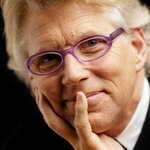
The Author:
|
Product Details:
- Price: $15.95
- 208 pages, 7.6 x 5.6 x 0.5 inches , softcover
- Publisher: St. Lynn's Press
- ISBN:0976763109
Payment is made either by Credit Card through the use of PayPal, as described below, or by check or money order made payable to "CLF" and mailed to:
Conscious Living Foundation
1110 Oberlin Drive, Suite 202
Glendale, CA 91205
The Book will be shipped upon verification of payment. If paying by check, please be sure to include shipping costs in the sum of $4.75.
Payment by Credit Card:
If you prefer to pay for our product through the use of a credit card, please click the "Buy" button, below.

"Cool Mind Warm Heart" - $15.95
To Conclude Your Shopping, Or Review Your Shopping Cart - 
Note: Orders in California are subject to Sales Tax of 8.25%
Shipping is by Air Letter Post for shipments outside the U.S. (Approximately 7 days).
 If you are making your purchase outside of the United States, please click the Red button, to the left, to add additional shipping charges in the sum of $6.00.