
|
||

Published by The Conscious Living Foundation E-mail:
CLF@consciouslivingfoundation.org
Home Free
Downloads
Quotations
Products Free
E-Books
We are pleased to offer, for your entertainment and inspiration, a new
kind of subject matter for our newsletter. Beginning with this
issue, we are offering an entire
spiritual novel - chapter by chapter, in serial form. Each
consecutive issue of our newsletter will contain the next chapter in
the book. In fact, we liked the idea so much, we're offering two
separate novels simultaneously. First, we are excited to present "The Third Eye"
by T. Lobsang Rampa, a fascinating, controversial and very popular account of
the life and esoteric experiences of a Tibetian Monk. Topics discussed
include reincarnation, clairvoyance, yetis and the unknown early history of the
earth. In addition, we are offering "A Romance of Two Worlds" by Marie Corelli.
This best selling Victorian novel explores the relationship between the occult
and Christianity, plus a discussion of guardian angels and life after death along with mystery,
romance and tragedy. The writing is beautiful and majestic and truly
appealing to the inner soul. We look forward to your comments about both
novels. On a practical level, we have responded to your requests for a simpler method
of payment when making purchases from our product catalog. We are now able
to take telephone orders for those who do not want to order through the website
(just call 818/502-9096).
In addition, we can now accept all major credit and debit cards directly through
our website without the necessity of paying through PayPal. Making
purchases is now simpler and quicker! We continue with our collection of essays by Ernest Holmes,
with his thoughts on "Hold To The Good". As always, Dr. Holmes' thoughts are empowering and encouraging.
Also, we're presenting an article by William Walker Atkinson entitled, "Mind
Building". In this issue we're focusing more deeply on the 12 Step Programs and
their ability to support personal and spiritual transformation.
We're pleased to offer two articles for your consideration: First, "Understanding The Serenity Prayer"; most of us have heard and perhaps
know the prayer. However, this article, with great wisdom and compassion,
looks below the surface and explores the deeper guidance and inspiration
embedded within the prayer. Secondly, an explanation of the 11th step ("Through prayer and meditation to
improve our conscious contact with God") by Bill Wilson, one of the founders of
AA. - This is a surprising and revealing essay that will give you a
new perspective not only on the 11th step, but all the steps - set in a
historical context that offers real insight. In addition to an affirmation for recognizing your identity with Spirit, you'll
also find a new spiritual poem in our newsletter,
this one entitled, "God Bound". The biggest news we have to share in this issue, is the completion of our
first product in Chinese. In addition to offering The Conscious Word in
Spanish, we now offer Conscious Wisdom in Chinese. With these two daily
email products we hope to reach an ever larger portion of the world population
who are hungry for spiritual support but could not find it in their native
tongue. As usual, our newsletter also includes an
article by one of our most thought-provoking writers, Steve Roberts and his new essay,
"Celebrating Ignorance". You'll have to read the article to know
more... Finally, starting with the next issue, we want to add a new recurring "Letter
To the Editor" section to our newsletter. So, now is the chance for you to
share your thoughts, ideas, experiences, questions and opinions with us and the
rest of our readers. Just send an email to me at
bill@consciouslivingfoundation.org. You'll probably find it in
our next issue. As always, we are so grateful to all of you who visit our
website, and contribute through your generous donations, purchases,
emails and article submissions. Thank you for letting us share
this issue of our newsletter with you. William Simpson
PUBLISHERS'
FOREWORD The autobiography of
a Tibetan lama is a unique record of experience and, as such, inevitably
hard to corroborate. In an attempt to obtain conformation of the Author's
statements the Publishers submitted the MS. to nearly twenty readers, all
persons of intelligence and experience, some with special knowledge of the
subject? Their opinions were so contradictory that no positive result
emerged. Some questioned the accuracy of one section, some of another;
what was doubted by one expert was accepted unquestioningly by another.
Anyway, the Publishers asked themselves, was there any expert who had
undergone the training of a Tibetan lama in its most developed forms? Was
there one who had been brought up in a Tibetan family? Lobsang Rampa has
provided documentary evidence that he holds medical degrees of the
University of Chungking and in those documents he is described as a Lama of
the Potala Monastery of Lhasa. The many personal conversations we have
had with him have proved him to be a Man of unusual powers and attainments.
Regarding many aspects of his personal life he has shown a reticence that
was sometimes baffling; but everyone has a right to privacy and Lobsang
Rampa maintains that some concealment is imposed on him for the safety of
his family in Communist occupied Tibet. Indeed, certain details, such
as his father's real position in the Tibetan hierarchy, have been
intentionally disguised for this purpose. For these reasons the Author must
bear and willingly bears a sole responsibility for the statements made in
his book. We may feel that here and there he exceeds the bounds of Western
credulity, though Western views on the subject here dealt with can hardly be
decisive. None the less the Publishers believe that the Third Eye is in its
essence an authentic account of the upbringing and training of a Tibetan boy
in his family and in a lamasery. It is in this spirit that we are publishing
the book. Anyone who differs from us will, we believe, at least agree
that the author is endowed to an exceptional degree with narrative skill and
the power to evoke scenes and characters of absorbing and unique interest.
AUTHOR'S PREFACE I am a Tibetan. One
of the few who have reached this strange Western world. The
construction and grammar of this book leave much to be desired, but I have
never had a formal lesson in the English language. My “School of English”
was a Japanese prison camp, where I learned the language as best I could
from English and American women prisoner patients. Writing in English was
learned by “trial and error”. Now my beloved country is invaded-as
predicted-by Communist hordes. For this reason only I have disguised my true
name and that of my friends. Having done so much against Communism, I know
that my friends in Communist countries will suffer if my identity can be
traced. As I have been in Communist, as well as Japanese hands, I know from
personal experience what torture can do, but it is not about torture that
this book is written, but about a peace-loving country which has been so
misunderstood and greatly misrepresented for so long. Some of my
statements, so I am told, may not be believed. That is your privilege, but
Tibet is a country unknown to the rest of the world. The man who wrote, of
another country, that “the people rode on turtles in the sea” was laughed to
scorn. So were those who had seen “living-fossil” fish. Yet the latter have
recently been discovered and a specimen taken in a refrigerated airplane to
the U.S.A. for study. These men were disbelieved. They were eventually
proved to be truthful and accurate. So will I be. T. LOBSANG RAMPA
CHAPTER ONE
EARLY DAYS AT HOME
“Oe. Oe. Four years old and can't stay on a horse! You'll never make
a man! What will your noble father say?” With this, Old Tzu gave the
pony-and luckless rider—a hearty thwack across
the hindquarters, and spat
in the dust.
The golden roofs and
domes of the Potala gleamed in the brilliant sunshine. Closer, the blue
waters of the Serpent Temple lake rippled to mark the passing of the
water-fowl. From farther along the stony track came the shouts and cries of
men urging on the slow-moving yaks just setting out from Lhasa. From near
by Came the chest-shaking “bmmn, bmmn, bmmn” of the deep bass trumpets as
monk musicians practiced in the fields away from the crowds.
But I had no time for
such everyday, commonplace things. Mine was the serious task of staying on
my very reluctant pony. Nakkim had other things in mind. He wanted to be
free of his rider, free to graze, and roll and kick his feet in the air.
Old Tzu was a grim and
forbidding taskmaster. All his life he had been stern and hard, and now as
guardian and riding instructor to a small boy of four, his patience often
gave way under the strain. one of the men of Kham, he, with others,
had been picked for his size and strength. Nearly seven feet tall he was,
and broad with it. Heavily padded shoulders increased his apparent breadth.
In eastern Tibet there is a district where the men are unusually tall and
strong. Many were over seven feet tall, and these men were picked to act as
police monks in all the lamaseries. They padded their shoulders to increase
their apparent size, blackened their faces to look more fierce, and carried
long staves which they were prompt to use on any luckless malefactor.
Tzu had been a police
monk, but now he was dry-nurse to a princeling ! He was too badly crippled
to do much walking, and so all his journeys were made on horseback. In 1904
the British, under Colonel Younghusband, invaded Tibet and caused much
damage. Apparently they thought the easiest method of ensuring our
friendship was to shell our buildings and kill our people. Tzu had been one
of the defenders, and in the action he had part of his left hip blown away.
My father was one of
the leading men in the Tibetan Government. His family, and that of mother,
came within the upper ten families, and so between them my parents had
considerable influence in the affairs of the country. Later I will give
more details of our form of government.
Father was a large man,
bulky, and nearly six feet tall. His strength was something to boast
about. In his youth he could lift a pony off the ground, and he was one of
the few who could wrestle with the men of Kham and come off best.
Most Tibetans have
black hair and dark brown eyes. Father was one of the exceptions, his hair
was chestnut brown, and his eyes were grey. Often he would give way to
sudden bursts of anger for no reason that we could see.
We did not see a great
deal of father. Tibet had been having troublesome times. The British had
invaded us in 1904, and the Dalai Lama had fled to Mongolia, leaving my
father and others of the Cabinet to rule in his absence. In 1909 the Dalai
Lama returned to Lhasa after having been to Peking. In 1910 the Chinese,
encouraged by the success of the British invasion, stormed Lhasa. The
Dalai Lama again retreated, this time to India. The Chinese were driven from
Lhasa in 1911 during the time of the Chinese Revolution, but not before they
had committed fearful crimes against our people.
In 1912 the Dalai Lama
again returned to Lhasa. During the whole time he was absent, in
those most difficult days, father and the others of the Cabinet, had the
full responsibility of ruling Tibet. Mother used to say that father's
temper was never the same after. Certainly he had no time for us children,
and we at no time had fatherly affection from him. I, in particular, seemed
to arouse his ire, and I was left to the scant mercies of Tzu “to make or
break”, as father said.
My poor performance on
a pony was taken as a personal insult by Tzu. In Tibet small boys of the
upper class are taught to ride almost before they can walk. Skill on a
horse is essential in a country where there is no wheeled traffic, where all
journeys have to be done on foot or on horseback. Tibetan nobles practice
horsemanship hour after hour, day after day. They can stand on the narrow
wooden saddle of a galloping horse, and shoot first with a rifle at a moving
target, then change to bow and arrow. Sometimes skilled riders will gallop
across the plains in formation, and change horses by jumping from saddle to
saddle. I, at four years of age, found it difficult to stay in one saddle!
My pony, Nakkim, was
shaggy, and had a long tail. His narrow head was intelligent. He knew an
astonishing number of ways in which to unseat an unsure rider. A favourite
trick of his was to have a short run forward, then stop dead and lower his
head. As I slid helplessly forward over his neck and on to his head he
would raise it with a jerk so that I turned a complete somersault before
hitting the ground. Then he would stand and look at me with smug
complacency.
Tibetans never ride at
a trot; the ponies are small and riders look ridiculous on a trotting pony.
Most times a gentle amble is fast enough, with the gallop kept for exercise.
Tibet was a theocratic
country. We had no desire for the “progress” of the outside world. We
wanted only to be able to meditate and to overcome the limitations of the
flesh. Our Wise Men had long realized that the West had coveted the riches
of Tibet, and knew that when the foreigners came in, peace went out. Now
the arrival of the Communists in Tibet has proved that to be correct.
My home was in Lhasa,
in the fashionable district of Lingkhor, at the side of the ring road which
goes all round Lhasa, and in the Shadow of the Peak. There are three
circles of roads, and the outer road, Lingkhor, is much used by pilgrims.
Like all houses in Lhasa, at the time I was born ours was two stories high
at the side facing the road. No one must look down on the Dalai Lama, so
the limit is two stories. As the height ban really applies only to one
procession a year, many houses have an easily dismantled wooden structure on
their flat roofs for eleven months or so.
Our house was of stone
and had been built for many years. It was in the form of a hollow square,
with a large internal courtyard. Our animals used to live on the
ground floor, and we lived upstairs. We were fortunate in having a
flight of stone steps leading from the ground; most Tibetan houses have a
ladder or, in the peasants’ cottages, a notched pole which one uses at dire
risk to one's shins. These notched poles became very slippery indeed
with use, hands covered with yak butter transferred it to the pole and the
peasant who forgot, made a rapid descent to the floor below.
In I910, during the Chinese
invasion, our house had been partly wrecked and the inner wall of the
building was demolished. Father had it rebuilt four stories high. It did
not overlook the Ring, and we could not look over the head of the Dalai Lama
when in procession, so there were no complaints.
The gate which gave
entrance to our central courtyard was heavy and black with age. The Chinese
invaders has not been able to force its solid wooden beams, so they had
broken down a wall instead. Just above this entrance was the office of the
steward. He could see all who entered or left. He engaged—and dismissed—
staff and saw that the household was run efficiently. Here, at his window,
as the sunset trumpets blared from the monasteries, came
the beggars of Lhasa to
receive a meal to sustain them through the darkness of the night. All the
leading nobles made provision for the poor of their district. Often chained
convicts would come, for there are few prisons in Tibet, and the convicted
wandered the streets and begged for their food.
In Tibet convicts are
not scorned or looked upon as pariahs. We realized that most of us
would be convicts—if we were found out—so those who were unfortunate were
treated reasonably.
Two monks lived in
rooms to the right of the steward; these were the household priests who
prayed daily for divine approval of our activities. The lesser nobles had
one priest, but our position demanded two. Before any event of note, these
priests were consulted and asked to offer prayers for the favour of the
gods. Every three years the priests returned to the lamaseries and were
replaced by others.
In each wing of our
house there was a chapel. Always the butter-lamps were kept burning before
the carved wooden altar. The seven bowls of holy water were cleaned and
replenished several times a day. They had to be clean, as the gods might
want to come and drink from them. The priests were well fed, eating the
same food as the family, so that they could pray better and tell the gods
that our food was good.
To the left of the
steward lived the legal expert, whose job it was to see that the household
was conducted in a proper and legal manner. Tibetans are very law-abiding,
and father had to be an outstanding example in observing the law.
We children, brother
Paljor, sister Yasodhara, and I, lived in the new block, at the side of the
square remote from the road. To our left we had a chapel, to the right was
the schoolroom which the children of the servants also attended. Our lessons
were long and varied. Paljor did not inhabit the body long. He was weakly
and unfit for the hard life to which we both were subjected. Before the
seven he left us and returned to the Land of Many Temples. Yaso was
six when he passed over, and I was four. I still remember when they came
for him as he lay, an empty husk, and how the Men of the Death carried him
away to be broken up and fed to the scavenger birds according to custom.
Now Heir to the Family,
my training was intensified. I was four years of age and a very indifferent
horseman. Father was indeed a strict man and as a Prince of the Church he
saw to it that his son had stern discipline, and was an example of how
others should be brought up.
In my country, the higher
the rank of a boy, the more severe his training. Some of the nobles were
beginning to think that boys should have an easier time, but not father.
His attitude was : a poor had no hope of comfort later, so give him kindness
and consideration while he was young. The higher-class boy had all riches
and comforts to expect in later years, so be quite brutal with him during
boyhood and youth, so that he should experience hardship and show
consideration for others. This also was the official attitude of the
country. Under this system weaklings did not survive, but those who did
could survive almost anything.
Tzu occupied a room on
the ground floor and very near the main gate. For years he had, as a police
monk, been able to see all manner of people and now he could not bear to be
in seclusion, away from it all. He lived near the stables in which father
kept his twenty horses and all the ponies and work animals.
The grooms hated the
sight of Tzu, because he was officious and interfered with their work. When
father went riding he had to have six armed men escort him. These men wore
uniform, and Tzu always bustled about them, making sure that everything
about their equipment was in order.
For some reason these
six men used to back their horses against a wall, then, as soon as my father
appeared on his horse, they would charge forward to meet him. I found that
if I leaned out of a storeroom window, I could touch one of the riders as he
sat on his horse. One day, being idle, I cautiously passed a rope through
his stout leather belt as he was fiddling with his equipment. The two ends
I looped and passed over a hook inside the window. In the bustle and talk I
was not noticed. My father appeared, and the riders surged forward. Five
of them. The sixth was pulled backwards off his horse, yelling that demons
were gripping him. His belt broke, and in the confusion I was able to pull
away the rope and steal away undetected. It gave me much pleasure, later,
to say “So you too, Ne-tuk, can't stay on a horse!”
Our days were quite
hard, we were awake for eighteen hours out of the twenty-four. Tibetans
believe that it is not wise to sleep at all when it is light, or the demons
of the day may come and seize one. Even very small babies are kept awake so
that they shall not become demon-infested. Those who are ill also have to
be kept awake, and a monk is called in for this. No one is spared from it,
even people who are dying have to be kept conscious for as long as possible,
so that they shall know the right road to take through the border lands to
the next world. At school we had to study languages, Tibetan and
Chinese. Tibetan is two distinct languages, the ordinary and the
honorific. We used the ordinary when speaking to servants and those of
lesser rank, and the honorific to those of equal or superior rank: The horse
of a higher-rank person had to be addressed in honorific style! Our
autocratic cat, stalking across the courtyard on some mysterious business,
would be addressed by a servant: “Would honorable Puss Puss deign to
come and drink this unworthy milk?” No matter how “honourable Puss Puss”
was addressed, she would never come until she was ready.
Our schoolroom was
quite large, at one time it had been used as a refectory for visiting monks,
but since the new buildings were finished, that particular room had been
made into a school for the estate. Altogether there were about sixty
children attending. We sat cross-legged on the floor, at a table, or long
bench, which was about eighteen inches high. We sat with our backs to the
teacher, so that we did not know when he was looking at us. It made us work
hard all the time. Paper in Tibet is hand made and expensive, far too
expensive to waste On children. We used slates, large thin slabs about
twelve inches by fourteen inches. Our “pencils” were a form of hard chalk
which could be picked up in the Tsu La Hills, some twelve thousand feet
higher than Lhasa, which was already twelve thousand feet above sea-level.
I used to try to get the chalks with a reddish tint, but sister Yaso was
very very fond of a soft purple. We could obtain quite a number of colours
: reds, yellows, blues, and greens. Some of the colours, I believe, were
due to the presence of metallic ores in the soft chalk base. Whatever the
cause we were glad to have them.
Arithmetic really
bothered me. If seven hundred and eighty-three monks each drank fifty-two
cups of tsampa per day, and each cup held five-eighths of a pint, what size
container would be needed for a week's supply? Sister Yaso could do these
things and think nothing of it. I, well, I was not so bright.
I came into my own when
we did carving. That was a subject which I liked and could do reasonably
well. All printing in Tibet is done from carved wooden plates, and so
carving was considered to be quite an asset. We children could not have
wood to waste. The wood was expensive as it had to be brought all the
way from India. Tibetan wood was too tough and had the wrong kind of grain.
We used a soft kind of soapstone material, which could be cut easily with a
sharp knife. Sometimes we used stale yak cheese!
One thing that was
never forgotten was a recitation of the Laws. These we had to say as soon
as we entered the schoolroom, and again ,just before we were allowed to
leave. These Laws were :
Return good for
good.
Do not fight with
gentle people.
Read the Scriptures
and understand them.
Help your neighbours.
The Law is hard on
the rich to teach them understanding and equity.
The Law is gentle
with the poor to show them compassion.
Pay your debts
promptly.
So that there was no
possibility of forgetting, these Laws were carved on banners and fixed to
the four walls of our schoolroom.
Life was not all study
and gloom though; we played as hard as we studied. All our games were
designed to toughen us and enable us to survive in hard Tibet with its
extremes of temperature. At noon, in summer, the temperature may be as high
as eighty-five degrees Fahrenheit, but that same summer's night it may drop
to forty degrees below freezing. In winter it was often very much colder
than this.
Stilt walking was
another of my passtimes. We used to dress up and become giants, and often
we would have fights on stilts—the one who fell off was the loser. Our
stilts were home-made, we could not just slip round to the nearest shop and
buy such things. We used all our powers of persuasion on the keeper of
the Stores—usually the Steward— so that we could obtain suitable pieces of
wood. The grain had to be just right, and there had to be freedom from
knotholes. Then we had to obtain suitable wedge-shaped pieces of
footrests. As wood was too scarce to waste, we had to wait our opportunity
and ask at the most appropriate moment.
The girls and young
women played a form of shuttlecock. A small piece of wood had holes made in
one upper edge, and feathers were wedged in. The shuttlecock was kept in
the air by using the feet. The girl would lift her skirt to a suitable
height to permit a free kicking and from then on would use her feet only, to
touch with the hand meant that she was disqualified. An active girl would
keep the thing in the air for as long as ten minutes at a time before
missing a kick.
The real interest in
Tibet, or at least in the district of U, which is the home country of Lhasa,
was kite flying. This could be called a national sport. We could only
indulge in it at certain times, at certain seasons. Years before it had
been discovered that if kites were flown in the mountains, rain fell in
torrents, and in those days it was thought that the Rain Gods were angry, so
kite flying was permitted only in the autumn, which in Tibet is the dry
season. At certain times of the year, men will not shout in the mountains,
as the reverberation of their voices causes the super-saturated rain-clouds
from India to shed their load too quickly and cause rainfall in the wrong
place. Now, on the first day of autumn, a long kite would be sent up from
the roof of the Potala. within minutes, kites of all shapes, sizes, and
hues made their appearance over Lhase, bobbing and twisting in the strong
breeze.
I love kite flying and
I saw to it that my kite was one of the first to sour upwards. We all made
our own kites usually with a bamboo framework, and almost always covered
with fine silk. We had no difficulty in obtaining this good quality
material, it was a point of honour for the household that the kite should be
of the finest class. Of box form, we frequently fitted them with a
ferocious dragon head and with wings and tail.
We had battles in which
we tried to bring down the kites of our rivals. We stuck shards of broken
glass to the kite string, and covered part of the cord with glue powdered
with broken glass in the hope of being able to cut the strings of others and
so capture the falling kite.
Sometimes we used to
steal out at night and send our kite aloft with little butter-lamps inside
the head and body. Perhaps the eyes would glow red, and the body would show
different colours against the dark night sky. We particularly liked it when
the huge Yak caravans were expected from the Lho-dzong district. In our
childish innocence we thought that the ignorant natives from far distant
places would not know about such “modern” inventions as our kites, so we
used to set out to frighten some wits into them.
One device of ours was
to put three different shells into the kite in a certain way, so that when
the wind blew into them, they would produce a weird wailing sound. We
likened it to fire-breathing dragons shreiking in the night, and we hoped
that its effect on the traders would be salutary. We had many a delicious
tingle along our spines as we thought of these men lying frightened in their
bed-rolls as our kites bobbed above.
Although I did not know
it at this time, my play with kites was to stand me in very good stead in
later life when I actually flew in them. Now it was but a game, although an
exciting one. We had one game which could have been quite dangerous: we
made large kites—big things about seven or eight feet square and with wings
projecting from two sides. We used to lay these on level ground near a
revine where there was a particularly strong updraught of air. We would
mount our ponies with one end of the cord looped round our waist, and then
we would gallop off as fast as our ponies would move. Up into the air
jumped the kite and souring higher and higher until it met this particular
updraught. There would be a jerk and the rider would be lifted straight off
his pony, perhaps ten feet in the air and sink swaying slowly to earth.
Some poor wretches were almost torn in two if they forgot to take their feet
from the stirrups, but I, never very good on a horse, could always fall off,
and to be lifted was a pleasure. I found, being foolishly adventurous, that
if I yanked at a cord at the moment of rising I would go higher, and further
judicious yanks would enable me to prolong my flights by seconds.
On one occasion I
yanked most enthusiastically, the wind cooperated, and I was carried on to
the flat roof of a peasant's house upon which was stored the winter fuel.
Tibetan peasants live
in houses with flat roofs with a small parapet, which retains the yak dung,
which is dried and used as fuel. This particular house was of dried mud
brick instead of the more usual stone, nor was there a chimney: an aperture
in the roof served to discharge smoke from the fire below. My sudden
arrival at the end of a rope disturbed the fuel and as I was dragged across
the roof, I scooped most of it through the hole on to the unfortunate
inhabitants below.
I was not popular. My
appearance, also through that hole, was greeted with yelps of rage and,
after having one dusting from the furious householder, I was dragged off to
father for another dose of corrective medicine. That night I lay on my face!
The next day I had the
unsavory job of going through the stables and collecting yak dung, which I
had to take to the peasant's house and replace on the roof, which was quite
hard work, as I was not yet six years of age. But everyone was satisfied
except me; the other boys had a good laugh, the peasant now had twice as
much fuel, and father had demonstrated that he was a
strict and just man. And
I? I spent the next night on my face as well, and I was not sore with horse
riding!
It may be thought that
all this was very hard treatment, but Tibet has no place for weaklings.
Lhasa is twelve thousand feet above sea-level, and with extremes of
temperature. Other districts are higher, and the conditions even more
arduous, and weaklings could very easily imperil others. For this reason,
and not because of cruel intent, training was strict.
At the higher altitudes
people dip new-born babies in icy streams to test if they are strong enough
to be allowed to live.
Quite often I have seen little processions approaching such stream, perhaps
seventeen thousand feet above the sea. At banks the procession will stop,
and the grandmother will take baby. Around her will be grouped the family:
father, mother, and close relatives. The baby will be undressed, and
grandmother will stoop and immerse the little body in the water, so that
only the head and mouth are exposed to the air. In the bitter cold the baby
turns red, then blue, and its cries of protest stop. It looks dead but
grandmother has much experience of such things, and the little one is lifted
from the water, dried, and dressed. If the baby survives, then it is as the
gods decree. If it dies, then it has been spared much suffering on earth.
This really is the kindest way in such a frigid country. Far better that a
few babies die then that they should be incurable invalids in a country
where there is scant medical attention.
With the death of my
brother it became necessary to have my studies intensified, because when I
was seven years of age I should have to enter upon training for whatever
career the astrologers suggested. In Tibet everything is decided by
astrology, from the buying of a yak to the decision about one's career. Now
the time was approaching, just before my seventh birthday, when mother would
give a really big party to which nobles and others of high rank would be
invited to hear the forecast of the astrologers.
Mother was decidedly
plump, she had a round face and black hair. Tibetan women wear a sort of
wooden framework on their head and over this the hair is draped to make it
as ornamental as possible. These frames were very elaborate affairs, they
were frequently of crimson lacquer, studded with semi-precious stones and
inlaid with jade and coral. With well-oiled hair the effect was very
brilliant.
Tibetan women use very
gay clothes, with many reds and greens and yellows. In most instances there
would be an apron of one colour with a vivid horizontal stripe of a
contrasting but harmonious colour. Then there was the earring at the left
ear, its size depending on the rank of the wearer. Mother, being a member
of one of the leading families, had an earring more than six inches long.
We
believe that women should have absolutely equal rights with men, but in the
running of the house mother went further than that and was the undisputed
dictator, an autocrat who knew what she wanted and always got it.
In the stir and flurry of preparing the house and the grounds
for the party she was indeed in her element. There was organizing to be
done, commands to be given, and new schemes to outshine the the neighbors to
be thought out. She excelled at this having travelled extensively with
father to India, Peking, and Shanghai, she had a wealth of foreign thought
at her disposal.
The date having been decided for the party, invitations were
carefully written out by monk-scribes on the thick, hand-made which was
always used for communications of the highest imprtance. Each invitation
was about twelve inches wide by about two feet long: each invitation bore
father's family seal, and as mother also was of the upper ten, her seal had
to go on as well. Father and mother had a joint seal, this bringing the
total to three Altogether the invitations were most imposing documents. It
frightened me immensely to think that all this fuss was solely about me. I
did not know that I was really of secondary impor- tance, and that the
Social Event came first. If I had been told that the magnificence of the
party would confer great prestige upon my parents, it would have conveyed
absolutely nothing to me, so I went on being frightened.
We had engaged special messengers to deliver these
invitations; each man was mounted on a thoroughbred horse. Each carried a
cleft stick, in which was lodged an invitation. The stick was surmounted by
a replica of the family coat of arms. The sticks were gaily decorated with
printed prayers which waved in the wind. There was pandemonium in the
courtyard as all the messengers got ready to leave at the same time. The
attendants were hoarse with shouting, horses were neighing, and the huge
black mastiffs were barking madly. There was a last-minute gulping of
Tibetan beer before the mugs were put down with a clatter as the ponderous
main gates rumbled open, and the troop of men with wild yells galloped out.
In Tibet messengers deliver a written message, but also give
an oral version which may be quite different. In days of long ago bandits
would waylay messengers and act upon the written message, perhaps attacking
an ill-defended house or procession It became the habit to write a
misleading message which often lured bandits to where they could be
captured. This old custom of written and oral messages was a survival of the
past. Even now, sometimes the two messages would differ, but the oral
version was always accepted as correct.
Inside the house everything was bustle and turmoil. The
walls were cleaned and recoloured, the floors were scraped and the wooden
boards polished until they were really dangerous to walk upon. The carved
wooden altars in the main rooms were polished and relacquered and many new
butter lamps were put in use. Some of these lamps were gold and some were
silver, but they were all polished so much that it was difficult to see
which was which. All the time mother and the head steward were hurrying
around, criticizing here, ordering there, and generally giving the servants
a miserable time. We had more than fifty servants at the time and others
were engaged for the forthcoming occasion. They were all kept busy, but they
all worked with a will. Even the courtyard was scraped until the stones
shone as if newly quarried. The spaces between them were filled with
coloured material to add to the gap appearance. When all this was done, the
unfortunate servants were called before mother and commanded to wear only
the cleanest of clean clothes.
In the kitchens there was tremendous activity; food was
being prepared in enormous quantities. Tibet is a natural refrigerator, food
can be prepared and kept for an almost indefinite time. The climate is very,
very cold, and dry with it. But even when the temp- erature rises, the
dryness keeps stored food good. Meat will keep for about a year, while
grain keeps for hundreds of years.
Buddhists do not kill, so the only meat available is from
animals which have fallen over cliffs, or been killed by accident. Our
larders were well stocked with such meat. There are butchers in Tibet, but
they are of an “untouchable” caste, and the more orthodox families do not
deal with them at all.
Mother had decided to give the guests a rare and expensive
treat. She was going to give them preserved rhododendron blooms. Weeks
before, servants had ridden out from the courtyard to go to the foothills of
the Himalaya where the choicest blooms were to be found. In our country,
rhododendron trees grow to a huge size, and with an astonishing variety of
colours and scents. Those blooms which have not quite reached maturity are
picked and most carefully washed. Carefully, because if there is any
bruising, the preserve will be ruined. Then each flower is immersed in a
mixture of water and honey in a large glass jar, with special care to avoid
trapping any air. The jar is sealed, and every day for weeks after the jars
are placed in the sunlight and turned at regular intervals, so that all
parts of the flower are adequately exposed to the light. The flower grows
slowly, and becomes filled with nectar manufactured from the honey-water.
Some people like to expose the flower to the air for a few days before
eating, so that it dries and becomes a little crisp, but without losing
flavour or appearance These people also sprinkle a little sugar on the
petals to imitate snow. Father grumbled about the expense of these
preserves : “We could have bought ten yak with calves for what you have
spent on these pretty flowers,” he said. Mother's reply was typical of
women: “Don't be a fool! We must make a show, and anyhow, this is my
side of the house.”
Another delicacy was shark's fin. This was brought from
China sliced up, and made into soup. Someone had said that “shark's fin
soup is the world's greatest gastronomic treat”. To me the stuff tasted
terrible; it was an ordeal to swallow it, especially as by the time it
reached Tibet, the original shark owner would not have recognized it. To
state it mildly, it was slightly “off”. That, to some, seemed to enhance
the flavour.
My favorite was succulent young bamboo shoots, also brought
from China. These could be cooked in various ways, but I preferred them raw
with just a dab of salt. My choice was just the newly opening yellow-green
ends. I am afraid that many shoots, before cooking, lost their ends in a
manner at which the cook could only guess and not prove! Rather a pity,
because the cook also preferred them that way.
Cooks in Tibet are men; women are no good at stirring tsampa;
or making exact mixtures. Women take a handful of this, slap in a lump of
that, and season with hope that it will be right. Men are more thorough,
more painstaking, and so better cooks. Women are all right for dusting,
talking, and, of course, for a few other things. Not for making tsampa,
though.
Tsampa is the main food of Tibetans. Some people live on
tsampa and tea from their first meal in life to their last. It is made from
barley which is roasted to a nice crisp golden brown. Then the barley
kernels are cracked so that the flour is exposed, then it is roasted again.
This flour is then put in a bowl, and hot buttered tea is added. The
mixture is stirred until it attains the consistency of dough. Salt, borax,
and yak butter are added to taste. The result —tsampa—can be rolled into
slabs, made into buns, or even molded into decorative shapes. Tsampa is
monotonous stuff alone, but it really is a very compact, concentrated food
which will sustain life at all altitudes and under all conditions.
While some servants were making tsampa, others were making
butter. Our butter-making methods could not be commended on hygienic
grounds. Our churns were large goat-skin bags, with the hair inside. They
were filled with yak or goat milk and the neck was then twisted, turned
over, and tied to make it leakproof. The whole thing was then bumped up and
down until butter was formed. We had a special butter-making floor which
had stone protuberances about eighteen inches high. The bags full of milk
were lifted and dropped on to these protuberances, which had the effect of
“churning” the milk. It was monotonous to see and hear perhaps ten servants
lifting and dropping these bags hour after hour. There was the indrawn “uh
uh” as the bag was lifted, and the squashy “zunk” as it was dropped.
Sometimes a carelessly handled or old bag would burst. I remember one
really hefty fellow who was showing off his strength. He was working twice
as fast as anyone else, and the veins were standing out on his neck with the
exertion. Someone said: “You are getting old, Timon, you are slowing up.”
Timon grunted with rage and grasped the neck of the bag in his mighty hands;
lifted it, and dropped the bag down. But his strength had done its work.
The bag dropped, but Timon still had his hands—and the neck—in the air.
Square on the stone protuberance dropped the bag. Up shot a column of
half-formed butter. Straight into the face of a stupefied Timon it went.
Into his mouth, eyes, ears, and hair. Running down his body, covering him
with twelve to fifteen gallons of golden slush.
Mother, attracted by the noise, rushed in. It was the only
time I have known her to be speechless. It may have been rage at the loss
of the butter, or because she thought the poor fellow was choking; but she
ripped off the torn goat-skin and thwacked poor Timon over the head with
it. He lost his footing on the slippery floor, and dropped into the
spreading butter mess.
Clumsy workers, such as Timon, could ruin the butter. If
they were careless when plunging the bags on to the protruding stones, they
would cause the hair inside the bags to tear loose and become mixed with the
butter. No one minded picking a dozen or two hairs out of the butter, but
whole wads of it was frowned upon. Such butter was set aside for use in the
lamps or for distribution to beggars, who would heat it and strain it
through a piece of cloth. Also set aside for beggars were the “mistakes” in
culinary preparations. If a household wanted to let the neighbors know what
a high standard was set, really good food was prepared and set before the
beggars as “mistakes”. These happy, well-fed gentlemen would then wander
round to the other houses saying how well they had eaten. The neighbors
would respond by seeing that the beggars had a very good meal. There is
much to be said for the life of a beggar in Tibet. They never want; by
using the “tricks of their trade” they can live exceedingly well. There is
no disgrace in begging in most of the Eastern countries. Many monks beg
their way from lamasery to lamasery. It is a recognized practice and is not
considered any worse than is, say, collecting for charities in other
countries. Those who feed a monk on his way are considered to have done a
good deed. Beggars, too; have their code. If a man gives to a beggar, that
beggar will stay out of the way and will not approach the donor again for a
certain time.
The two priests attached to our household also had their
part in the preparations for the coming event. They went to each animal
carcass in our larders and said prayers for the souls of the animals who had
inhabited those bodies. It was our belief that if an animal was killed—even
by accident—and eaten, humans would be under a debt to that animal. Such
debts were paid by having a priest pray over the animal body in the hope of
ensuring that the animal reincarnated into a higher status in the next life
upon earth. In the lamaseries and temples some monks devoted their whole
time praying for animals. Our priests had the task of praying over the
horses, before a long journey, prayers to avoid the horses becoming too
tired. In this connection, our horses were never worked for two days
together. If a horse was ridden on one day, then it had to be rested the
next day. The same rule applied to the work animals. And they all knew it.
If, by any chance a horse was picked for riding, and it had been ridden the
day before, it would just stand still and refuse to move. When the saddle
was removed, it would turn away with a shake of the head as if to say:
“Well, I'm glad that injustice has been removed!” Donkeys were worse. They
would wait until they were loaded, and then they would 1ie down and try to
roll on the load.
We had three cats, and they were on duty all the time. One
lived in the stables and exercised a stern discipline over the mice. They
had to be very wary mice to remain mice and not cat-food. Another cat lived
in the kitchen. He was elderly, and a bit of a simpleton. His mother had
been frightened by the guns of the Younghusband Expedition in 1904, and he
had been born too soon and was the only one of the litter to live.
Appropriately, he was called “Younghusband”. The third cat was a very
respectable, matron who lived with us. She was a model of maternal duty,
and did her utmost to see that the cat population was not allowed to fall.
When not engaged as nurse to her kittens, she used to follow mother about
from room to room. She was small and black, and in spite of having a hearty
appetite, she looked like a walking skeleton. Tibetan animals are not pets,
nor are they slaves, they are beings with a useful purpose to serve, being
with rights just as human beings have rights. According to Buddhist belief,
all animals, all creatures in fact, have souls, and are reborn to earth in
successively higher stages.
Quickly the replies to our invitations came in. Men came
galloping up to our gales brandishing the cleft messinger-sticks. Down from
his room would come the steward to do honour to the messenger of the
nobles. The man would snatch his message from the stick, and gasp out the
verbal version. Then he would sag at the knees and sink to the ground with
exquisite histrionic art to indicate that he had given all his strength to
deliver his message to the House of Rampa. Our servants would play their
part by crowding round with many clucks: “Poor fellow, he made a wonderfully
quick journey. Burst his heart with the speed, no doubt. Poor, noble
fellow!” I once disgraced myself completely by piping up : “Oh no he
hasn't. I saw him resting a little way out so that he could make a final
dash.” It will be discreet to draw a veil of silence over the painful scene
which followed.
At last the day arrived. The day I dreaded, when my career
was to be decided for me, with no choice on my part. The first rays of the
sun were peeping over the distant mountains when a servant dashed into my
room. “What? Not up yet, Tuesday Lobsang Rampa? My, you are a
lie-a-bed! It's four o'clock, and there is much to be done. Get up!”
I pushed aside my blanket and got to my feet. For me this day was to point
the path of my life.
In Tibet, two names are given, the first being the day of
the week on which one was born. I was born on a 'Tuesday, so Tuesday was my
first name. Then Lobsang, that was the name given to me by my parents. But
if a boy should enter a lamasery he would be given another name, his “monk
name”. Was I to be given another name? Only the passing hours would tell.
I, at seven, wanted to be a boatman swaying and tossing on the River Tsang-po,
forty miles away. But wait a minute; did I? Boatmen are of low
caste because they use boats of yak hide stretched over wooden formers.
Boat- man! Low caste? No! I wanted to be a professional flyer of kites.
That was better, to be as free as the air, much better than being in a
degrading little skin boat drifting on a turgid stream. A kite flyer, that
is what I would be, and make wonderful kites with huge heads and glaring
eyes. But today the priest-astrologers would have their say. Perhaps I'd
left it a bit late, I could not get out of the window and escape now.
Father would soon send men to bring me back. No, after all, I was a Rampa,
and had to follow the steps of tradition. Maybe the astrologers would say
that I should be a kite flyer. I could only wait and see.
Tuesday Lobsang Rampa was a very
popular writer who claimed to have been a Lama in Tibet before spending the
second part of his life in the body of a British man, Cyril Henry Hoskin,
who described himself as the "host" of T. Lobsang Rampa. To many, Dr. Rampa was a revolutionary of his time,
one of the first of the Eastern teachers to bring Buddhism and
metaphysics to the West in a popular fashion. He wrote many books about
spiritual matters, beginning with "The Third Eye". Lobsang Rampa attempts to teach the timeless universal
truths, pointing along the spiritual path. Dr. Rampa's books also discuss
the state of humanity's progress and he shows how we can be a positive force
for good, thus improving ourselves and helping our fellow humans and all
sentient beings. Look for the next chapter in The Third
Eye by T. Lobsang Rampa in the next edition of our newsletter. To read
other books by T. Lobsang Rampa, visit our free Ebook section by clicking
Here. In addition, in the past it was
necessary to go through PayPal in order to make purchases from our
website. This is no longer the case. If you prefer using
PayPal to make your purchases, that option is still available.
However, we are now able to process all major credit and debit cards
directly through our website without going through PayPal. This
increases the simplicity and decreases the time involved in making a
purchase through us. We now accept Visa, Mastercard, Discover and
American Express. Our goal is to make your shopping experience as
relaxing and simple as possible. Thank you for your continuing
suggestions! To visit our product catalog, click
Here.
Please be assured that your email address
will not be sold,
rented
UNITY All Manifestation of Life is from and invisible to a visible plane; and
it is a silent, effortless process of spiritual realization. We must unify,
in our own mentalities, with Pure Spirit. To each of us, individually, God,
or Spirit, is the Supreme Personality of the Universe; the Supreme
Personality of that which we, ourselves, are. It is only as the relationship
of the individual to this Deity becomes enlarged that he has a consciousness
of power. There should always be a recognition in treatment of the Absolute Unity
of God and man; the Oneness, Inseparability, Indivisibility, Changelessness;
God as the Big Circle, and man as the little circle. Man is in God and God
is in man; just as a drop of water is in the ocean, while the ocean is in
the drop of water. This is the recognition Jesus had when He said: "I and my
Father are One." There is a Perfect Union; and to the degree that we are
conscious of this Union we incorporate this consciousness in our word, and
our word has just as much power as we put in it, no more and no less. Within this Infinite Mind each individual exists, not as a separated, but
as a separate, entity. We are a point in Universal Consciousness, which is
God, and God is our Life, Spirit, Mind and Intelligence. We are not
separated from Life, neither is It separated from us; but we are separate
entities in It, Individualized Centers of God's Consciousness. We came from Life and are in Life, so we are One with Life; and we know
that Instinctive Life within, which has brought us to the point of
self-recognition, still knows in us the reason for all things, the purpose
underlying all things; and we know that there is nothing in us of fear,
doubt or confusion which can hinder the flow of Reality to the point of our
recognition. We are guided, daily, by Divine Intelligence into paths of
peace wherein the soul recognizes its Source and meets It in joyful Union,
in complete At-one-ment. HOLD TO THE GOOD Such is the power of clear thought that it penetrates things; it removes
obstructions, the reason being that there is nothing but consciousness,
nothing but Mind. The only instrument of Mind is idea. See with perfect
clearness and never become discouraged nor overcome by a sense of
limitation. Know this:—that the Truth with which you are dealing is
absolute. All of God, all of Truth, all there is, is at the point of man's
recognition; and every time you give a treatment, and all the way through
it, keep bringing this back to your remembrance. Never struggle; say, "There is nothing to struggle over; everything is
mine by Divine Right; Infinite Intelligence is my Intelligence; Divine Love
is my Love; Limitless Freedom is my Freedom; Perfect Joy is my Gladness;
Limitless Life is my Energy." Let us BLIND OURSELVES TO NEGATION, as far as we are mentally able to.
LET US NOT TALK, THINK, OR READ ABOUT ANYTHING DESTRUCTIVE, whether it be
war, pestilence, famine, poverty, sickness, or limitation of any kind.
Looking at this from a practical standpoint, there is all to win and nothing
to lose. The rapid progress we would make if we should do this would be
wonderful. We are always dealing with First Cause. Nothing else can equal the
satisfaction that comes to one when he perceives himself, from the silence
of his own soul and the activity of his own thought, actually bringing about
a condition without the aid of visible instrumentalities. There is nothing
else as satisfying as to heal some disease purely by the power of thought;
this shows that we are dealing with First Cause. We must definitely neutralize confusion and doubt. We should take time,
daily, to conceive of ourselves as being tranquil, poised, powerful,—always
in control of every situation; as being always the highest concept of the
Divine which we can imagine. We should never hesitate to think of ourselves
in this way. The Ancients used to teach their pupils to say to
themselves—"Wonderful, wonderful, wonderful me!"—until they lost sight of
themselves as Mary Smith or John Jones, and perceived themselves as Divine
Realities. Then, when they came back to the objectivity of Mary Smith and John Jones, they brought with
them that subtle power which distinguishes Spiritual Growth,—the Atmosphere
of Reality.
THE CHRIST Who is man? He is the Christ. Who is the Christ? The Son, begotten of the
only Father;—not the only begotten Son of God. Christ means the Universal
Idea of Sonship, of which each is a Member. That is why we are spoken of as
Members of that One Body; and why we are told to have that Mind in us "which
was also in Christ Jesus." Each partakes of the Christ Nature to the degree
that the Christ is revealed through him, and to that degree he becomes the
Christ. We should turn to that Living Presence within, Which is the Father
in Heaven, recognize It as the One and Only Power in the Universe, unify
with It, declare our word to be the presence, power and activity of that
One, and speak the word as if we believed it; because the Law is the servant
of the Spirit. If we could stand aside and let the One Perfect Life flow through us, we
could not help healing people. This is the highest form of healing. We have gone through all of our abstract processes of reasoning and have
found out what the Law is and how It works; now we can forget all about It,
and know that there is nothing but the Word; the Law will be working automatically. We must forget
everything else, and let our word be spoken with a deep inner realization of
love, beauty, peace, poise, power, and of the great Presence of Life at the
point of our own consciousness. REALIZATION We do not dare to throw ourselves with abandonment into a seeming void;
but if we did, we would find our feet planted firmly on a rock, for there is
a place in the mentality, in the heights of its greatest realizations, where
it throws itself with complete abandonment into the very center of the
Universe. There is a point in the supreme moment of realization where the
individual merges with the Universe, but not to the loss of his
individuality; where a sense of the Oneness of all Life so enters his being
that there is no sense of otherness; it is here that the mentality performs
seeming miracles, because there is nothing to hinder the Whole from coming
through. We can do this only by providing the great mental equivalents of
Life, by dwelling and meditating upon the immensity of Life; and yet as
vast, as immense, as limitless as It is, the whole of It is brought to the
point of our own consciousness. We comprehend the Infinite only to the degree that It expresses Itself
through us, becoming to us that which we believe It to be. And so we daily
practice in our meditations the realizations of Life:—"Infinite, indwelling
Spirit within me, Almighty God within me, Perfect Peace within me, Complete
Satisfaction within me, Real Substance within me; that which is the Truth
within me." "I am the Truth," Jesus said. He said: "I am the way; I am the
Life; no man cometh unto the Father but by Me." How true it is! We cannot
come unto the Father Which art in Heaven except through our own nature. Right here, through our own nature, is the gateway and the path that
gradually leads to illumination, to realization, to inspiration, to the
intuitive perception of everything. The highest faculty in man is intuition, and it comes to a point
sometimes where, with no process of reasoning at all, he realizes the Truth
intuitively. So we should daily meditate, particularly if we are practicing
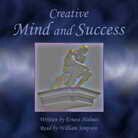
right along. The Conscious Living Foundation is proud to offer its recording of one
of Ernest Holmes most famous books, "Creative Mind and Success".
To learn more about the recording and hear several FREE selections on
such topics as: - How to attract friends Just click
Here. We are also pleased to announce the recent release of
"Affirmations of Ernest Holmes" - a collection of 20 of Dr. The affirmations cover a wide range of topics from healing
and excellent health, to increased abundance and prosperity, to a greater
sense of uni8ty and oneness with Spirit. These affirmations have been
practiced by hundreds of thousands of people for decades and have been found
to work with great effectiveness. To hear several free samples from this wonderful recording,
please click
Here. If you enjoy our inspirational stories and articles, be
sure to visit our website for more:
Affirmation: (Selection from The Conscious
Word Daily Affirmation)
God is truly mine And I am becoming An inlet and an outlet For all that is in God. I claim the inheritance that God wants me to have in my daily life.
(The preceding is a selection from our daily affirmation, emailed
directly to you each morning, called The Conscious Word. You can
obtain more information by clicking
Here.)
News:
A New Collection of Bath and Body Products
SoapOne products are designed with harmony and beauty in mind.
One hundred percent vegetable soap with essential oils - the primary
ingredients are: Palm Nut Oil, Palm Oil, and Palm Butter. Our new products are circular in shape and come in
four unique flavors: Allure, Bloom,
To see our full line of soaps, body scrubs, hand creams, room
sprays and
To visit the Bath and Body section of our catalog, which contains
a wide variety of Bath Gift Sets, Perfumes, Women's Pajamas, Bathroom Decor
Sets, Pillows, Head and Hair products and Cosmetics - please click
Here. Essay: Celebrating Ignorance
by Steve Roberts
I recall an anecdote about a father who boarded a
subway train with his two young sons, ages eight and 10 in my mind’s
eye. The boys were especially unruly, racing around, screaming,
throwing themselves on the floor and on each other. This annoyed
other passengers no end. One of them finally sniffed to the dad,
you should learn to control your children; there’s no call for them
to bother everyone else. The dad said, yes, I wish I could. The
thing is, we are on our way home from the hospital where their
mother just died, and neither they nor I know what to do with all
the pain we feel.
The lesson of history I celebrate most is that
everything we know is wrong. Not wrong the opposite of right; but
wrong incomplete, short-sighted. In St. Mike’s grammar school we
kids were told that to be safe should a Russian nuclear missile hit
our playground we needed to hide under our desks. Life, I find,
includes one reminder after another that whatever we “know for sure”
will, in all likelihood, sooner or later—in this incarnation or
another—be reclassified somewhere along the continuum from “not
quite the whole story” to “nutty as hell.”
Why is this worth celebrating? Because of its
ability to deepen our appreciation of that rarest and most valuable
of human activities: not taking ourselves seriously.
As I write this, there’s a reasonable chance that our
next president will be either a woman or an African-American
man—which, I have on good authority, has prompted more than a few of
us to bet the cookie jar that hell has frozen over.
Our ignorance isn’t an absence of mental horsepower,
goodness knows. If we put our mind to it we could clone a chicken
and a pig and cut the work of making ham & eggs by half. We could
also meaningfully reverse global warming; improve our rapport with
other cultures to the point of lessening violent conflict; and see
to it that no one is financially devastated because of his or her
health…to name three of countless opportunities we have the smarts
to meet—but not, so far, the collective maturity. And maturity, to
me, is measured by the extent to which our actions are rooted in the
awareness that our well-being and the well-being of others are one.
(A tall order, my own track record suggests.)
Remember that sign: “Teenagers: Leave home now while
you still know everything”? I feel that’s who we are as a species:
relatively immature and so full of ourselves we’re blind to it.
Which is really good news when you think about it. It means we’re
growing up. Imagine who we’ll be five thousand years from now. In
fact, I see our descendants in 7008 being awestruck that we 21st
century stewards of spaceship earth managed to survive while holding
so many wild beliefs. Such as: there are things more important than
kindness; it’s possible to be superior or inferior to another;
forces outside myself are responsible for my happiness—and of course
no woman in her right mind would be seen in public without her nails
done.
Celebrating ignorance is not so much about letting go
of our convictions as it is about holding them more lightly: giving
ourselves a break that, just maybe, believe it or not, astonishing
as it may be, there’s more to life than we perceive.
The Dalai Lama was once asked what he would do if
science proved that his Buddhist beliefs were erroneous. He didn’t
say impossible. He didn’t say, why these teachings are eternal
verities unassailable by logic. No. Instead, not missing a beat,
His Holiness laughed and said, “I’d change my mind.”
How easily could we answer the same?
To find out
more about Steve, see examples of his stone sculptures or
read a chapter from his book, click
Here. Steve Roberts is the author
of
Cool Mind Warm Heart, a collection of essays, stories, and
photographs of stone sculptures he builds on his Vermont farm. He
can be found on the web at
CoolMindWarmHeart.com and at
TheHeartOfTheEarth.com. If you enjoy our inspirational stories and articles, be
sure to visit our website for more: The Conscious Word is an
email newsletter sent directly to you each day. Each issue
contains an inspirational affirmation designed to help uplift your
spirits and support your conscious efforts at personal and spiritual
growth and development.
By practicing the
affirmation which we email to you, for 3 to 4 minutes a day, you create
an effective tool that will help you experience an ongoing positive
change in your life.
We all
“know” many things. However, “knowing” something, in and of
itself, does not make it “true” to us. We can read all about
oranges; we can look at pictures of oranges and we can talk to people
who have eaten oranges. But, until we taste the orange ourselves,
we do not truly understand the full truth about what an orange is. Likewise, we
can experience the “truth”, the real nature, of many more subtle and
essential concepts by “tasting” them. One of the capabilities of
an affirmation is to provide us with a “taste” of the subject matter of
the affirmation. However,
something else is also at work in an affirmation. One of the
secrets of the universe is that when a human believes something is so,
it becomes what he or she believes. Jesus said
“Verily I say unto you, if ye have faith and doubt not, ye shall not
only do this which is done to the fig tree, but also if ye shall say
unto this mountain, `Be thou removed and be thou cast into the sea,' it
shall be done. And all things whatsoever ye shall ask in prayer,
believing, ye shall receive.” (Book of Matthew verses 21 and 22) The key
words in this quote are “If ye have faith and doubt not..” and “all
things whatsoever ye shall ask believing..” Jesus is
describing this receptivity of the universe to human belief.
However, there are requirements for this belief to be effective.
Jesus says we must have “faith” without doubt and that we must “believe”
as we ask. James
Allen’s famous premise “As a man Thinketh, so it is” expresses this same
truth. In essence,
when we become utterly convinced of the truth of something, which means
we have absolutely no doubts about it, the universe will be molded and
shaped to match our conviction. The challenging part is to find a
way to become convinced of something that is not yet actualized.
To cultivate our faith. This is where affirmations can help. By taking a
thought or collection of thoughts and impressing them deeply upon the
mind with persistence and concentration, a conviction can be
cultivated. Developing our own personal convictions, especially
about ourselves, and then deepening and persisting in those convictions
is a major key to our health, happiness and success in life. For More Information, an example issue and A Two Week
Free Trial, Click
Here. After your 2 week free
trial, our normal subscription rate is $3.50 each month. In addition, CLF is pleased to announce the introduction
of our newest Daily Conscious Wisdom is an email
newsletter sent directly to you each day. Each issue contains
inspirational guidance and wisdom designed to help uplift your spirits and
support your conscious efforts at personal and spiritual growth and
development. We're offering a
Two Week Free Trial subscription, so
that you can experience personally how Conscious Wisdom can help change your
life. The regular monthly subscription costs $3.50 each month. For More Information, an example issue and A Two Week
Free Trial, Click
Here. Your
Gift Certificate can be printed out for your personal delivery,
or it can be emailed directly. Our Gift Certificates are
available in denominations from $5.00 to $1,000 and every product in our
catalog is available for purchase with our CLF Gift Certificates.
Click
Here for more information. This time give the gift of a deeper spiritual life and
increased personal growth.
Please be assured that your email address
will not be sold,
rented
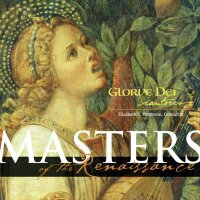
This expanding selection of recordings are primarily
performances by the acclaimed choral group Gloriae Dei Cantores.
You will find selections by Renaissance masters, sacred
music of Russia (including numbers by Rachmaninoff and Tchaikovsky),
Palestrina, Brahms and Mozart. In addition, there are more traditional spiritual
songs such as Amazing Grace, What A Friend We Have In Jesus and Simple
Gifts. As always, free audio samples from each album are
available for your download and enjoyment. Click
Here for more information and lots
of free samples. Spiritual encouragement can come in many forms - one
of the most powerful are these recordings of the deep attunement and
inspiration of these great masters. News: Your First Source For
Everything -
In addition to our Inspirational Products, we also now offer many other products
which we all tend to
Welcome to Conscious Living, our newsletter designed to share our
current activities and growth, along with articles and information that we hope
will be supportive and encouraging in your efforts to live each moment with more
joy and satisfaction.
Director

Serial:
The Third Eye by T. Lobsang Rampa

Archery was good fun and it did develop muscles. We used bows mad of
yew, imported from india, and sometimes we made crossbows from Tibetan
wood. As Buddists we never shot at living targets. Hidden servants would
pull a long string and cause a target to bob up and down—we never knew which
to expect. Most of the others could hit the target when standing on the
saddle of a galloping pony. I could never stay on that long! Long
jumps were a different matter. Then there was no horse to bother about. We
ran as fast a we could, carrying a fifteen-foot pole, then when our speed
was sufficient, jumped with the aid of the pole. I use to say that the
others stuck on a horse so long that they had no strength in their legs, but
I, who had to use my legs, really could vault. It was quite a good system
for crossing streams, and very satisfying to see those who were trying to
follow me plunge in one after the other.
News:
Respecting and Supporting Your Financial
Confidentiality
We
have received emails and telephone calls from several visitors to our
website asking if they could make a purchase by telephone.
Some do not feel confident providing credit card information on the
Internet. In response to this request, The Conscious Living
Foundation is proud to announce that we are now able to accept your
credit card payments by calling us at 818/502-9096. If you call
during non-office hours, please leave your phone number and we'll call
you back.
Sign Up
To Receive Each Issue of This Free Newsletter:
or given to any other organization or individual. We
respect your privacy.

- An affirmation on love
- The power of words
- Old age and opportunity
- Money as a spiritual idea
- How to know just what to do
- Developing Intuition
- What we will attract
Holmes' most powerful and effective affirmations and treatments. Each
of the affirmations was designed by him to create the best mental attitude
and sense of feeling that will promote positive change according to the
subject matter of the affirmation.
Articles on Personal Growth, Health
and Positive Change - Click
Here.
Inspiring Stories - Click
Here.
Affirmations - Click
Here.
Spiritual Poems - Click
Here.
The
Conscious Living Foundation is pleased to announce a new collection of
healthy bar soaps, "SoapOne" - soap products with spirit. Available
now at a special introductory price.
Reflection
and Serenade. To find out more, click
Here.
body
creams, please click
Here.

Articles on Personal Growth,
Health and Positive Change - Click
Here.
Inspiring Stories - Click
Here.
News: The Conscious
Word and Conscious Wisdom are Now Available With A 2 Week FREE Trial
Inspiration product, Conscious Wisdom.
News: Gift Certificates Now Available
- Give the gift of
Spiritual Inspiration and Renewal
Consider
a Gift Certificate from The Conscious Living Foundation. What
better gift to give friends and loved ones than the gift of new hope,
inspiration, encouragement and upliftment? If you are considering
buying a gift, why not let your loved ones select something that can
genuinely make a difference in their lives?
Sign Up
To Receive Each Issue of This Free Newsletter:
or given to any other organization or individual. We
respect your privacy.
News:
New Product Line Added To Our Catalog:
Spiritual Classical Music
The
Conscious Living Foundation is pleased to announce that we have added an
entirely new category of music to our product catalog. In addition
to our wide variety of New Age music CDs and Cassettes, we are now
offering a variety of classical recordings of the very highest quality.
In
our attempt to offer new products and services
which support your efforts at personal and
spiritual growth,
The
Conscious Living Foundation is now offering for
the first time, a greatly expanded catalog of
products. We hope, once you see our low
prices, that you'll think of us as your first
source for all your needs.
purchase
as part of our daily living.
incense,
wind chimes, bird houses and angels to clocks, jewelry, kitchen supplies, tools
and telephones.
It is our hope that you
will consider our product catalog as your first
source for these other purchases. Even if
the product is not specifically inspirational,
your purchase from us helps tremendously in our
ability to remain in existence and continue
to offer our other, more spiritually directed
products and
services.
To find our new catalog, just click the red “Products” button at the top of most pages of our website, or to explore the wide gamut of new products right now, just click Here.
Conscious Friends - Creating a World-Wide Spiritual
Community
To that end, The Conscious Living
Foundation is pleased to announce the formal launch of the Conscious Friends
section of our website, in the hope that we all can find new like-minded
friends, develop deeper relationships and work together to enhance our
world. Conscious Friends offers several excellent features
designed to help us communicate with each other, including access to custom
created profiles of spiritually oriented people, a wide range of stimulating
and thought-provoking forums, public and private chat rooms, instant
messaging and our own private and confidential internal email system.
However, the most valuable assets within Conscious Friends
are the people who create the community. Even in its infancy, we have
members from Croatia, Great Britain, Switzerland, India, South Africa,
Nigeria, Canada, France, Mexico, New Zealand, Australia, Pakistan, Zimbabwe,
Portugal, Oman and Norway, as well as all over the United States. And,
our membership continues to grow every day. Don't miss this great
opportunity to discover how wide-spread, optimistic and hopeful our global
spiritual community really is. Joined together we can create a world-wide Spirit village,
a global community of high-minded individuals who can help uplift and serve
each other and all our brothers and sisters hungry for a deeper meaning in
their lives. Membership is free, so we invite you to visit Conscious
Friends and discover for yourself the great opportunities which await you -
just click
Here.
Tens
of thousands of people visit The Conscious Living Foundation website.
Married or single, male or female, youth or senior, we all appreciate having
friends who share our common interest in personal and spiritual growth.
As we learn and mature, many of us have realized that relationships are an
important part of creating and maintaining a harmonious and uplifting life.
Appeal: We Depend On Your Donations -
The Conscious Living Foundation's only source of income is your donations and purchase of our products. If you enjoy our newsletter and website, if you receive inspiration and encouragement from our efforts, we urge you to make a donation to help sustain and grow this work.
By helping us, you are supporting the spiritual growth of the tens of thousands of people from all over the world, who regularly visit our website.
Click
Here for more information. Thank you!
Please be assured that your email address
will not be sold,
rented
Sign Up
To Receive Each Issue of This Free Newsletter:
or given to any other organization or individual. We
respect your privacy.
|
Serial: A Romance of Two Worlds
by
Marie Corelli
|
|
If you're considering buying a gift for a friend or loved one, why not select gifts that can genuinely make a difference in their lives? This time, give books, candle holders, incense, hand made soaps, videos, spoken word CDs and a huge variety of other products that will continue to inspire and encourage throughout the year. To view our entire catalog of products, click Here.
We make buying even easier with our Special Product discounts. We have collected together some of our most popular spoken word audio CDs at tremendous savings. Click Here to see our great selection of best sellers and favorites. They include audio versions of your all time favorites, perfect to listen to while driving or exercising.
Deepen your practice of the techniques that bring new joy and hope into your life - and give the gift of a deeper spiritual life and increased personal growth.
|
|
|
Please be assured that your email address
will not be sold,
rented
or given to any other organization or individual. We
respect your privacy.
| News: Exploring The
Free Downloads Library of The Conscious Living Foundation |
|
One of the most popular sections of our website is our Free Downloads Library. It is made up of several sections which are updated on a continuous basis (Click on any underlined words to go directly to that section):
E-Books
Titles include works by: James Allen, Emilie Cady, Catherine Ponder, Walter Lanyon, Charles Filmore, Wallace Wattles, Mary Baker Eddy, Florence Scovel Shin, Ernest Holmes, William Atkinson, Confucius, Aristotle, Henry David Thoreau, Herman Hesse, Signmund Freud, Ralph Waldo Trine, Thomas A Kempis, Rabindranath Tagore, Lao Tze, Paramahansa Yogananda, Krishnamurti, Kahlil Gibran, Buddha, Patanjali, Napoleon Hill, Mahatma Gandhi plus Literature by authors such as: Jules Verne, Mark Twain, Robert Louis Stevenson, a Sherlock Holmes Collection, Edgar Rice Burroughs, P.G. Wodehouse, Alexander Dumas, H.G. Wells, a Wizard of Oz Collection and hundreds of other titles!
(Lectures, Talks, Sermons, Recorded Comments, Classes and Workshops)
In addition, it contains recordings of works such as: The Book of Proverbs, The Game of Life by Florence Scovel Shin, The Prophet by Kahlil Gibran, The Imitation of Christ by Thomas A' Kempis, Practicing The Presence of God by Brother Lawrence, Pilgrim's Progress by John Bunyan, The Science of Getting Rich by Wallace Wattles, The Dialogs of St. Catherine of Siena and As a Man Thinketh and Byways To Blessedness by James Allen.
(Music and sounds from a variety of sources, styles and historical periods)
(Large variety of films and videos, historic and modern, documentary and talks)
Our Video section currently contains: The Ocean At Dusk - Guided Relaxation, A Biography of Mother Teresa, Meditation and Movement, Imagination Meditation, Laughter Meditation, Music for Meditation and Healing, A CNN Report on the Health Benefits of Meditation, A Biography of Mary Baker Eddy, A Man of God - An Interview with Leonard Ravenhill, Paramahansa Yogananda & Sri Yukteswar, Paramahansa Yogananda & Ramana Maharshi, Paramahansa Yogananda at Mt. Washington, Paramahansa Yogananda on a Walk In New York, Paramahansa Yogananda Demonstrating How To Sleep, Krishnamurti Talks on Freedom, Krishnamurti Talks on Life and Death, Krishnamurti Talks on Meditation and Krishnamurti Talks on World Suffering.
(Nature Pictures, Saints, Sages, Gurus, Mandalas, Chakras, Fine Art)
(Complete Plays, Radio Dramatizations, Books Read Aloud and Stories To Entertain The Entire Family - With a special collection for children)
Our audio classics are dramatic portrayals designed to primarily entertain, but with wholesome content that expresses positive values and that are suitable for the entire family to experience together. They include such titles as:
The Importance of Being Earnest, Treasure Island, A Tale of Two Cities, War of the Worlds, Abraham Lincoln, The Count of Monte Cristo, The Immortal Sherlock Holmes, Around The World In 80 Days, Pickwick Papers, Julius Caesar and Jane Eyre.
In addition, there is a special Children's Section containing dramatizations and readings especially created for younger children. They include such titles as: The Little Mermaid, Aladdin and the Wonderful Lamp, Jack and The Bean Stalk, Puss and Boots, Blue Beard, Thumbelina, Cinderella, Twas the Night Before Christmas, Snowdrop and the 7 Dwarves, Robin Hood, The Golden Fleece, Beauty and The Beast, Rapunzel, King Arthur, Hansel and Gretel, Sleeping Beauty, The Emperor's New Clothes, The Magic Carpet and many, many more!
(Large Beautiful Pictures with Inspirational Quotes Suitable To Place on The Background of Your Computer Desktop or Screensaver Program.)
The images in this section of the newsletter are a few of the selections contained in our Wall Paper Download Library. To read the inspirational inscriptions, visit us by clicking "Wall Paper" above.
|
Let's share the gifts for which
we are most grateful:
joy, wisdom, love and the means to increase them in
our lives.
Click
Here for our special discounts.
|
|
For a collection of affirmations, click
Here.
For a large variety of inspiring
quotations, click
Here.
Let's share the gifts for which we are most grateful:
joy, wisdom, love and the means to increase them in our lives.
Click
Here for our special discounts.
|
Essay: There is a Science of Getting Rich by Wallace D. Wattles
News: Conscious Money Circulation "Abundant
Blessings"
Please be assured that your email address
will not be sold,
rented
| |||||||||||||
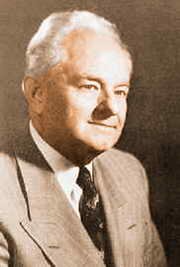
|
||||||
Let's share the gifts
for which we are most grateful: |
|
News: Two New Music CDs: "Soul Calls" and "Yoga Heart Healing"
|
|
YOGA HEART HEALING was created from the need to heal Anahata, the fourth chakra, considered the seat of universal love. Anahata is the color green. Our recording was created to support your practice of yoga, massage and other nurturing and healing activities.
Inspired by Dharma teachings from both Hindu and Buddhist wisdom, Yoga Heart Healing will open your heart chakra with its rich vibrant textures of soothing melodic transitions. - just click Here!
|
| Essay: Understanding The Serenity Prayer by Edna | ||||
|
||||
|
News: New Audio CD - Embracing The Stillness - Lessons In Meditation
|
|
|
|
Please be assured that your email address
will not be sold,
rented
or given to any other organization or individual. We
respect your privacy.
Let's share the gifts for which we are most grateful:
joy, wisdom, love and the means to increase them in our lives.
Click
Here for our special discounts.
Essay: Step 11 of the 12 Steps - An Explanation by Bill Wilson
(Co-Founder of Alcoholics Anonymous)
|
||||
|
If you enjoy our inspirational stories and articles, be sure to visit our website for more: Articles on Personal Growth, Health and Positive Change - Click
Here.
|
Let's share the gifts for which we are most grateful:
joy, wisdom, love and the means to increase them in our lives.
Click
Here for our special discounts.
We respect your time and privacy.
If you would prefer not to receive any further communication from us, please
click
Here and we will immediately remove your
name from our subscriber list and not attempt to contact you in the future.
All Contents Copyrighted, 2008, The Conscious Living Foundation