|
Articles On Personal Growth And Change
Below are a collection of insightful and encouraging articles on our personal growth and change. This page is designed to be a place where we can share the articles that have helped us move forward in our lives.
If you would like to share your favorite articles with us, email us at: . and we will add them to this page.
| In addition to the inspiring articles located directly below, new inspirational stories are always being uploaded to our Inspiring Articles and Stories Uploads Forum. To visit that forum, click Here. |
- Free Newsletter -
To receive regular updates on new additions to the site, lots of inspiring articles and essays and first opportunity to download our latest free E-books and free audio and video files:
| |
| Sign Up For Our Newsletter: |
|
|
|
Please be assured that your email address will not be sold, rented
or given to any other organization or individual.
To See Our Prior Newsletters, Click Here
We Need Your Help!
If you would like to make a donation (even $1.00 is a help), please click the "Donate" button.
If you would like to make a recurring donation of $5.00 per month, please click the "Subscribe" button.
(This equates to 16 cents a day and can be cancelled at any time.)
Thank you!
By helping us, you are supporting the spiritual growth of tens of thousands.
How I Bought A Pickup and Found God by Steve Roberts
First Steps To Spiritual Growth
An Inner And Outer Environment For Growth And Change
Are You Affirming Unconsciously?
Where Is My Joy?
The Healing Power Of The Precepts: Building Self Esteem The Buddhist Way
A Thought: What Is Success?
Happy And Healthy Thoughts
The Paradox Of Feeling Stable In An Unstable World
A Letter: Pilgrims Together
A Letter: Desiderata
Balancing Masculine And Feminine
A Story: Relativity
The Foundation Of Chan Buddhist Meditation
Christmas Story: One Solitary Life
Christmas Story: The Gift Of The Magi
Abraham Lincoln: An Inspiration To Persist
The Attitude Behind Persistence
The Fundamentals For Life - A Kid's View
The Fundamentals For Life - An Adult's View

"And what is it to work with love? It is to weave the cloth with threads drawn from your heart even as if your beloved were to wear that cloth. It is to build a house with affection even as if your beloved were to dwell in that house. It is to sow seeds with tenderness and reap the harvest with joy even as if your beloved were to eat the fruit. It is to charge all things you fashion with the breath of your own spirit..." Kahlil Gibran - from "The Prophet"
Listen to Kahlil Gibran's masterpiece on CD. Envelope yourself in its mystical poetic wisdom instead of listening to the radio and see the difference in your own life. The Prophet Unabridged - $19.98 (Two CD set)
Who Counts?
Love
Anything Is Possible
Are Happy People Born That Way?
Don't Look Back
Happiness On Hold
You Are Worthy
May You Always Feel Loved
Smelling The Roses: Better Living Through Savoring
Healing Through Song
Pilgrimage (A Meditation)
Q-TIP It - Quit Taking It Personally
The Promise
Memo From God
|
By Clicking The Button In The Middle of The Screen You can Watch A Large Number of Videos On YouTube That Address The Topic of "Spirituality"
If the initial video which is presented is not of interest, click on either the right or left arrow on the sides of the video screen (< or >) to progress to the next video.
|
Watch the latest videos on YouTube.com
|
|
Spiritual poems are snap shots – brief glimpses into a particular moment. Hopefully they serve to inspire and encourage you to begin or continue your own spiritual journey of discovery.
While they may inspire, poems can not give you the actual experiences that they attempt to describe. In order for you to experience your own growth and transformation, you must walk the path, not merely view photographs of another’s journey.
This chapter is a brief “how to” of pragmatic preliminary steps that can be taken to begin or deepen your own personal progress to a happier, more aware life. They are included with my best wishes and with the confidence that you will find that which you seek.
“Change begets change. Nothing propagates so fast. If a man habituated to a narrow circle of cares and pleasures, out of which he seldom travels, step beyond it, though for never so brief a space, his departure from the monotonous scene on which he has been an actor of importance would seem to be the signal for instant confusion.... The mine which Time has slowly dug beneath familiar objects is sprung in an instant; and what was rock before, becomes but sand and dust.”
- Charles Dickens
Most of us live in a whirlwind created by our thoughts and activities. Our conscious attention is not on our life, but on the thousand things to do and say. We have a choice, whether to be driven by our desires for fortune, fame, the right work, doing a good job, finding the right mate, improving our health, or a limitless number of other hopes and desires – or to consider some alternative.
These hopes and desires, thoughts and actions, create the whirlwind. And to the degree we are emotionally and physically moved by them, we immerse ourselves in that whirlwind. Eventually, we forget that being happy is important – that appreciating the beauty of this moment is necessary for our health. Rather, we continue to be driven deeper and deeper into “doing” and we may lose our “being”.
But, there is another way. There is a life with more joy, more peace, more health, more sincere appreciation for the constant gifts of life and love. Where to begin? Carl Jung said, "Your vision will become clear only when you can look into your heart. Who looks outside dreams; who looks inside, awakes."
Meditation
Of all the tools presented here, meditation is the most important. It is the most effective. However, it is also the most subtle and may often feel unproductive, if you require an instant perception of progress.
There are a large variety of meditation techniques. Some involve bodily movement, some looking at an outer object such as a candle flame or mandala, others involve chanting or listening to a sound, such as a gong or bell. These are all effective and may be appropriate techniques with which to begin.
Your goal in meditating is to allow the mind to relax and for thoughts to slow down and eventually stop – even if only for short periods of time.
During your meditation, always keep your attention on the meditation technique. When thoughts intrude, do not get caught in the loop of recognizing that you’re thinking and then have an additional thought that makes a judgment on you for thinking, and then having another thought that you should stop thinking, etc. This chain of thoughts can continue throughout your meditation time. This is not meditation – this is thinking about issues relating to meditation.
As you are able to let your thinking subside, you will discover spaces between your thoughts. These spaces are created by the technique. Let these spaces expand. Inwardly, rest in these spaces; embrace them.
(For the complete chapter on first steps to growth and change, see "From The Path - Verses From The Mystic Journey" by clicking Here)
Copyright 2004 by The Conscious Living Foundation, All Rights Reserved
|
|

It's time to read this inspiring collection of spiritual poetry written by the founder and Director of The Conscious Living Foundation, William Simpson. From The Path - Verses on the Mystic Journey - $11.99.
Find out why the critics are saying, "...sheer joyful wisdom, wonder, warmth and wild beauty... The language is stunning... I think From The Path is more than just a book of poems. It is a way of thinking and being that comes from our connection with language and the power of words." - BookIdeas.com
"A spiritual bullet that will penetrate your soul with excitement for the written word.. poems filled with inspiration about... faith, love and beliefs. An appealing book of wisdom... a wonderful gift or tool for your own soul searching." - Midwest Book Review
(Return To Top)
|
“Nothing is lost upon a man who is bent upon growth; nothing wasted on one who is always preparing for … life by keeping eyes, mind and heart open to nature, men, books, experience … and what he gathers serves him at unexpected moments in unforeseen ways.”
Hamilton Wright Mabie
Having come to the conclusion that you want your life to be better than it is now, that you want positive change and growth in your life, is a wonderful step forward. However, the next step is figuring out how to actually start and maintain that process of growth and change.
This is the first in a series of articles taken from the class outline for Fundamentals of Conscious Living, one of the ongoing workshops offered by the Conscious Living Foundation.
In this series we will explore a variety of questions related toward the goal of developing a life lived more consciously.
How do we change and grow? What are the requirements that will allow us to genuinely become something new – something that comes closer to our higher aspirations?
We possess internal mechanisms that we use to perceive and understand our life’s experience. Unfortunately, we also possess internal obstructions that distort and confuse our perceptions and understanding.
We have access to techniques and tools that mankind has discovered to aid us in overcoming those obstructions and exploring higher perceptions of the nature of ourselves and the nature of reality. But, somehow, we are still inhibited in our ability to use these tools and techniques to advantage. What do we have to do to in order to complete the circle of thinking about change to actually achieving it?
In many cases, it is our ability to be genuinely involved, rather than to distance ourselves and “observe” the process of our own experience that leads to genuine learning, growth and change. To “have our whole heart in it” as the common phrase says, rather than to be satisfied with a mere intellectual understanding. Bridging that gap is the first issue that we would like to discuss.
There are four initial requirements to be met in order for a personal shift in involvement from an intellectual “understanding” to a personal, experiential “knowing” to take place:
1. Vulnerability:
The experiences that we each can potentially have during our daily lives as well as during time shared with others can only have meaning for “you”, if “you” allow them to enter into “you”.
We are all trained to be skeptical and we are not urging you to set aside all reasonableness. We are definitely not asking you to accept on faith what is said in our CLF workshops. However, we are urging you to apply your defenses consciously and by choice rather than reactively and “instinctively”.
The purpose of the Fundamentals Of Conscious Living workshops and CLF generally, is about “you” opening the doors of new awareness and “you” walking through those doors, and “you” applying awareness to what you perceive on the other side of those doors and “you” recognizing the authenticity of those experiences and “you” applying the lessons from those experiences to “your” daily life.
This cannot and will not happen unless you open yourself to the process of change and that will not happen unless you allow yourself to be vulnerable.
Vulnerability will not happen for most of us immediately. It is a process. However, that process begins with a conscious decision to let down the barriers, to let our first reaction be one of a loving embrace rather than a “pushing away”.
One of the prerequisites for vulnerability is:
2. A Safe and Loving Environment:
You are an essential ingredient in creating this prerequisite. The only way we can create and maintain a safe environment during our workshops and classes is if you do everything you can to support that feeling. This is also true in what we bring to all of the environments we share in our daily routines.
Primarily that means, set aside “judging”. That doesn't mean to set aside discrimination and awareness; just set aside for a little while, the need to characterize, compare and make value assessments of everything that everyone else says.
And, (and this is more difficult) everything that you say.
In this context, the opposite of what we mean by “judgment” is “acceptance”.
To the degree that we can turn off that calculating, constantly measuring part of our minds that keeps an updated score on right and wrong, good and bad, intelligent and stupid, insightful and boring and replaces it with continuous, patient, understanding, embracing, loving, encouragement; you will doing your part to support the environment you share with others.
Similarly, you are also creating the best internal environment for your own experience.
However, among all the elements of your participation, the one that is most fundamental to any genuine change in your life is:
3. Your Willingness to Change:
Sometimes it is much easier to say “I want to change” than to really mean it. As soon as we take this concept out of the theoretical and apply it to our own personalities, it generally gets scary pretty quickly.
We have all built up these personality structures that we use to define ourselves. “This is who I am; take it or leave it”. Anytime there is an adjustment in that structure, some part of ourselves will feel uncomfortable.
The degree of uncomfortability that you are willing to experience, has a direct one-to-one relationship with the degree of change that you are willing to experience.
It is not the goal of CLF to change you. It is our goal to give you an opportunity and an environment to allow you to change yourself. Obviously, this will not work unless you genuinely want to change.
William Burroughs said “Desperation is the raw material of drastic change. Only those who can leave behind everything they have ever believed in can hope to escape.”
In other words, willingness and desire to change usually comes when we are having painful, mold-shattering experiences.
This pattern of desire to change when things are tough is repeated in the lives of most of the great personalities who have achieved success in their chosen area of life.
Generally, we are only willing to change when we are forced to. Are you ready to change? Do you desire to change? Do you genuinely have to change?
If your answers to those questions is “yes”, then you have come to the right place. The essence of CLF’s workshops is actual, positive, personal change.
The last element that is essential to our success is:
4. Trust:
The trust required is not trust in some specific individual or trust in CLF or the other people participating in your class or your life, but rather, our old and faithful friend – “you”.
What does it mean to trust yourself? The source of any insight or realizations that you might experience during our work together will be you. We suggest that you trust and accept that what feelings come to your awareness are right for you at this moment in time.
In the Fundamentals of Conscious Living workshops, as in life, the primary approach that we use is one of shared interaction. We take turns looking within ourselves to find answers to a variety of questions on a variety of subjects relating to personal and spiritual growth.
When those answers come to you, trust them. Trust that the deeper feelings and intuitions that may arise are your truth, at least for the moment, until greater understanding comes.
If we can’t rely on our own personal understanding of the moment, what can we rely on? This, in no way, is obviating the need to rely on Spirit. But, Spirit tends to use instruments, and to be effective as an instrument of Spirit - to do God’s will - requires this same trust.
If, over time, we can come to embrace, accept and trust the thoughts and feelings that are communicated through our own hearts, we will have successfully begun the journey from distancing ourselves from our lives to becoming more directly connected to our experiences, our feelings and our potential for positive change. (To be continued.)
|
|
(Return To Top)
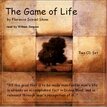
Florence Scovel-Shin remains an outstanding proponent of the power of thought. Throughout this recording, examples of positive thoughts and the influence they have on our life's experiences, are laid out in entertaining, inspiring detail.
As Dr. Norman Vincent Peale said "The Game of Life is filled with wisdom and creative insights. That its teachings will work I know to be fact for I've long used them myself." The Game of Life - $19.98 (2 CD Set)
|
What’s floating beneath the surface of our conscious awareness? Subliminal or subtle thoughts that define who we are: how healthy we are, how successful we are, how happy we are. What are these thoughts telling us about ourselves? What are they telling us we can and can’t do? How many times do we tell ourselves we can’t do something, and are hardly aware of what we’re thinking?
These thoughts are so familiar to us that they go unnoticed, so we often don’t even see how our lives follow the direction of those thoughts. We may wonder why we’re not succeeding or why our health doesn’t improve.
If we become more aware of our thoughts, we might find the answer there. We may discover that our conscious desires don’t match our subconscious desires. We may discover that we are sabotaging our very efforts to improve and grow on all levels.
What can we do once we discover the lack of alignment between what we’re thinking and what we need and desire? We can start to think new thoughts and keep thinking them until they become our habitual thought pattern and eventually create the reality we want.
It does little good to blame others or our environment for what we have or don’t have in life when it’s our thoughts that are largely responsible for how things turn out. And since we are responsible for our own thoughts, we are responsible for what manifests in our lives.
Many of us at the Conscious Living Foundation practice some form of affirmation and visualization. Affirmation and visualization, together or practiced separately, can create the change in our thought patterns that in turn create changes in our condition or circumstances — sometimes within a matter of minutes.
Even if things don’t change as rapidly as we’d like, we have a changed and more empowering consciousness, one that feels in charge and is doing everything within its power to create whatever we want or need. As we wait for conditions to improve, we are buoyed by the strength of our changed consciousness.
|
By Clicking The Button In The Middle of The Screen You can Watch A Large Number of Videos On YouTube That Address The Topic of "Affirmations"
If the initial video which is presented is not of interest, click on either the right or left arrow on the sides of the video screen (< or >) to progress to the next video.
|
Watch the latest videos on YouTube.com
|
|
|
(Return To Top)
|
Some years ago as I was walking down the street from the office where I worked, on my way to lunch, I noticed a man in his late thirties, selling candy, gum and cigarettes from a little table set up at the corner of a major intersection.
As I walked by, I realized that he was sitting in a wheel chair and had only a limited ability to use his hands or to speak.
As I continued to pass his stand, day after day, I started to say hello as I went by, and as time continued to pass, we developed a relationship in which I stopped to talk for a few minutes each day at lunch time.
Initially, my motivation was to do a little good for someone else. However, as I was walking away from one of our discussions, I realized for the first time that I was feeling better than I did before I had walked up to him.
It suddenly dawned on me that I was receiving more than I was giving.
For quite awhile I’ve been involved in a choir that visits convalescent homes on a regular basis, singing for the patients.
When we arrive, ten to fifteen patients are lined up in the television room, all sitting in wheelchairs, usually staring into space, with a gray, deadened look on their faces. As we begin to sing (usually songs from the 30’s and 40’s; songs they remember), the transformation begins: Color returns to their cheeks, soon, their eyes look up at us in recognition and within the blink of an eye they are singing and clapping along with us – smiling and happy.
Before you know it, other patients are moving down the hall toward the music; staff and other visitors are magnetically drawn; all sharing and regenerating the mysterious magic of love. It’s pretty difficult to get through a performance with a dry eye.
The first miracle of our giving is the reawakening of the patients.
But, the second, and perhaps deeper miracle is that the choir, and each individual within it, is also transformed. Our initial sense of love and compassion is transformed into Rejoicing!
Where in the world is that Joy coming from?
I’m not sure. Clearly it has something to do with helping others, but I think there’s more to it than that. There’s something about getting ourselves out of the way.
In those brief moments when I put the man on the corner before myself, what flowed through me filled me with Joy, on the way to bringing him love.
When, through some grace, the choir forgets itself and radiates the love that flows through it, each of us exalts in that same indescribable Joy.
I know that as a parent, in those early days when our children were so tiny I could hold them in the palms of my hands, they were so helpless, and so dependent on us to love and sustain them, that it was impossible to not give them every ounce of our love and caring. And, we were transformed in a way that has not grown stale, but only deepened with the years.
It is becoming clearer to me that the more I let go of my petty concerns and fears and attachments to the outcome of things, the more something wonderful and mysterious works through me to bless myself and others.
There’s Joy hiding out there somewhere – just beyond our self!
I guess the final question is how do we get ourselves out of the way, so the joy can come through?
I learned an affirmation from a great saint that seems to explain one way. It has been worth my effort in learning and repeating it through the years:
“I relax and cast aside all mental burdens,
Allowing God to express through me
His perfect love, peace and wisdom.”
|
|
 The Conscious Word - Daily Affirmations Emailed Directly To You - The Conscious Word - Daily Affirmations Emailed Directly To You -
You already know that practicing affirmations is a great way of improving your health, increasing your happiness and awakening your receptivity to prosperity and all the good you desire in your life. Now The Conscious Living Foundation has created a new method of supporting you in your efforts.
The Conscious Word contains an inspiring affirmation, with instructions on how to practice it, emailed directly to you each day of the year. By practicing the affirmation which we email to you for 3 to 4 minutes a day, you create an effective tool that will help you experience an ongoing positive change in your life.
Now is the time to make a new effort to take control of your life with just one small step toward the positive changes you've been seeking. For more information and an example issue, just click Here.
|
Throughout the history of Buddhism, the Buddha has been described as a doctor, treating spiritual ills. The path of practice he taught has likewise served as therapy for suffering hearts and minds. This understanding of the Buddha and his teachings dates back to the earliest texts, but its meaning for contemporary practitioners has become more relevant than ever.
Buddhist meditation is often touted as a form of healing, and many psychotherapists now recommend that their patients try meditation as part of their treatment. But the Buddha understood--and experience has shown--that meditation on its own can’t provide a total therapy. It requires outside support. In many ways, modern meditators have been so destabilized by the stimuli of mass civilization that they often lack the resilience, persistence, and self-esteem needed to achieve concentration and cultivate insight. To provide a grounding in these qualities, and to foster a personal environment conducive to meditation, the Buddha prescribed a path made up not only of mindfulness, concentration, and insight practices, but also of virtue. And virtue begins with the Five Precepts, which are:
- to refrain from intentionally killing any animal, from insects on up the evolutionary ladder;
- to refrain from stealing;
- to refrain from illicit sex, that is, sexual intercourse outside of a stable, committed relationship;
- to refrain from lying;
- to refrain from intoxicants (such as alcohol, marijuana, and psychotropic drugs).
These precepts constitute the first step on the path. There is a tendency to dismiss them as Sunday-school rules bound to old cultural norms that no longer apply to modern society, but this misses the role that the Buddha intended for them: to be part of a therapy for wounded minds. In particular, they are aimed at curing two ailments that underlie low self-esteem and block progress on the path--regret and denial.
When our actions don’t measure up to certain standards of behavior, we either regret the actions or engage in one of two kinds of denial--denying that our actions did, in fact, happen, or denying that the standards of measurement are really valid. These responses are like wounds in the mind. Regret is an open wound, tender to the touch, while denial is like hardened scar tissue twisted around a tender spot. When the mind is wounded in these ways, it can’t settle down comfortably in the present, for it finds itself resting on raw, exposed flesh or calcified knots.
This is where the Five Precepts come in. Healthy self-esteem comes from living up to a set of standards that is practical, clear-cut, humane, and worthy of respect. The precepts provide just such a set of standards.
The standards are simple. They may not always be easy or convenient, but they are always possible to live by. Some people translate the precepts into standards that sound more lofty or noble. To some, taking the second precept, for example, means not abusing the planet’s resources. But that's an impossibly high standard.
The Buddha understood that if you give people standards that take a little effort and mindfulness but are still possible to meet, their self-esteem soars dramatically as they find themselves actually meeting those standards. They can then face more demanding tasks with confidence.
The precepts are formulated with no ifs, ands, or buts. This means that they provide very clear guidance. There’s no room for waffling or less-than-honest rationalizations. An action either fits in with the precepts or it doesn’t. Anyone who has raised children has found that while they may complain about hard and fast rules, they actually feel more secure with them than with rules that are vague and always open to negotiation.
Clear-cut rules don’t allow for unspoken agendas to come sneaking in the back door of the mind. If, for example, the precept against killing allowed you to kill living beings when their presence is inconvenient--as in the case of mosquitos--that would place your convenience on a higher level than your compassion for life. Convenience would become your unspoken standard--and unspoken standards provide huge tracts of fertile ground for hypocrisy and denial to grow. If, however, you stick by the standards of the precepts, then you are providing unlimited safety for all. In terms of other precepts, you provide safety for their possessions and their sexuality, and truthfulness and mindfulness in your communication with them.
The precepts are humane both to the person who observes them and to the people affected by his or her actions. If you observe them, you are aligning yourself with the doctrine of karma, which teaches that the most important powers shaping your experience of the world are the intentional thoughts, words, and deeds you choose in the present moment. This means that you are not insignificant.
With every choice you make--at home, at work, at play--you are exercising your power in the ongoing shaping of the world. At the same time, this principle allows you to measure yourself in terms that are entirely under your control: your intentional actions in the present moment. In other words, they don’t force you to measure yourself in terms of your looks, strength, brains, financial prowess, or any other criteria that depend less on your present karma than they do on karma from the past. Also, they don’t play on feelings of guilt or force you to bemoan your past lapses. Instead, they focus your attention on the ever-present possibility of living up to your standards in the here and now.
When you adopt a set of standards, it’s important to know whose standards they are and to see where those standards come from, for in effect you are joining their group, looking for their approval, and accepting their criteria for right and wrong. In this case, you couldn’t ask for a better group to join: the Buddha and his noble disciples.
The Five Precepts, in the words of the Buddha, are "standards appealing to the noble ones." From what the texts tell us of the noble ones, they aren’t people who accept standards simply on the basis of popularity. They have put their lives on the line to see what leads to true happiness and seen for themselves, for example, that all lying is pathological, and that any sex outside a stable, committed relationship is spiritually and emotionally, as well as physically, unsafe. Other people might not respect you for living by the Five Precepts, but noble ones do, and their respect is worth more than that of anyone else in the world. You can look at the standards by which you live and breathe comfortably as a full-fledged, responsible human being. For that’s what you are.
Thanissaro Bhikkhu was ordained in the Thai forest tradition of Buddhism in 1976 and is the abbot of Metta Forest Monastery near San Diego, Calif. He is the translator of numerous Buddhist texts, among them the Dhammapada. His most recent books include "The Wings to Awakening" and "Noble Strategy."
|
By Clicking The Button In The Middle of The Screen You can Watch A Large Number of Videos On YouTube That Address The Topic of "Enlightenment"
If the initial video which is presented is not of interest, click on either the right or left arrow on the sides of the video screen (< or >) to progress to the next video.
|
Watch the latest videos on YouTube.com
|
|
|
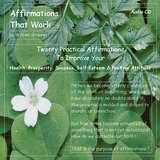
We all now understand the power of practicing Affirmations. We can take control of our lives by taking control of our thoughts.
This collection of 20 affirmations on CD, gives you the powerful thought seeds that you can cultivate through daily practice. Turn your driving time into productive time and change your life! Affirmations That Work - $14.95
To laugh often and much;
To win the respect of intelligent people and the affection of children;
To earn the appreciation of honest critics and endure the betrayal of false friends;
To appreciate beauty;
To find the best in others;
To leave the world a bit better, whether by a healthy child, a garden patch or a redeemed social condition;
To know even one life has breathed easier because you have lived;
This is to have succeeded.
|
|
(Return To Top)
- Free Newsletter -
To receive regular updates on new additions to the site, lots of inspiring articles and essays and first opportunity to download our latest free E-books and free audio and video files:
| |
| Sign Up For Our Newsletter: |
|
|
|
Please be assured that your email address will not be sold, rented
or given to any other organization or individual.
To See Our Prior Newsletters, Click Here
|
You can't have a feeling without first having a thought. Most of us have talked to ourselves in such negative ways for years we actually start to believe we are nothing. About a year and a half ago I started to really "listen" to how I talked to myself. I was shocked. No wonder I was depressed and felt I didn't deserve to live. It took great effort to overcome my negative thought patterns.
This list of Happy and Healthy Thoughts was my starting point. Reading this daily was like taking baby steps. However, as I practiced daily reading and reinforcing new thought patterns I began to feel better. I posted a copy on my refrigerator, in the bathroom and I still carry a copy in my Daytimer. Now, when I catch myself "dumping" on me, I try to correct those self-defeating thoughts.
Read this everyday. Post them where you can see them. Carry a copy in your organizer, purse or pocket. It will lift your spirits.
1. I am a unique and precious human being, always doing the best I can, always growing in wisdom and love.
2. I don't need to prove myself to anyone, not even to myself, for I know that I am perfectly fine as I am.
3. I make my own decisions and assume responsibility for any mistakes. However, I refuse to feel shame or guilt about them. I do the best I can, and this 100 percent is good enough.
4. I am not my actions, I am the actor. My actions may be good or bad. That does not make me good or bad.
5. Whenever I am tempted to punish myself, I remember to be kind and gentle instead. I know that in order to be the best I can be, I need forgiveness and understanding.
6. I know that it is okay to need. I try to keep in touch with my needs so that I can respond to them.
7. I know that others cannot be expected to read my mind or to guess my needs. In fairness to them and to me, I ask for what I need.
8. I deserve to be appreciated. When others show their appreciation, I embrace it with open arms. I never try to deny or diminish my value.
9. I live one day at a time and do first things first.
10. I take great pride in what I do, in what I value and in the way I live for I truly believe in myself.
11. My mistakes and nonsuccess do not make me a louse, a failure, or whatever. They only prove that I am imperfect, that is human. It is wonderful to be human.
12. I love myself, absolutely and unconditionally, for that is what I truly need and deserve.
|
|
(Return To Top)
- Free Newsletter -
To receive regular updates on new additions to the site, lots of inspiring articles and essays and first opportunity to download our latest free E-books and free audio and video files:
| |
| Sign Up For Our Newsletter: |
|
|
|
Please be assured that your email address will not be sold, rented
or given to any other organization or individual.
To See Our Prior Newsletters, Click Here
|
This is the second in a series of articles taken from the class outline for Developing a Spiritual lifestyle: The Fundamentals of Conscious Living, one of the ongoing workshops offered by the Conscious Living Foundation. In this series we will explore a variety of questions related toward the goal of developing a life lived more consciously.
Ovid says, “All things change, nothing is extinguished.... There is nothing in the whole world which is permanent. Everything flows onward; all things are brought into being with a changing nature; the ages themselves glide by in constant movement.”
In this article we will investigate more deeply into how each of us accommodates consistency and change in our daily lives – and whether our current life paradigm supports our desire to grow.
Let’s take a quick survey:
1. On a scale of 1 to 10, how stable does your life feel? 10 means your life feels totally stable, 1 means you life is pure chaos.
2. How predictable does your life feel? (1 to 10)
3. What percentage of your life feels like it is the same from day to day? 100% means your life feels exactly the same from day to day.
In offering this survey in our workshops, the usual answers are in the 7 to 9 (or 70% to 90%) range
How did you answer? How predictable and stable does your life feel, when you answer the question with the first thought that comes to your mind?
Why we feel a sense of “sameness”
What are the specific items in our daily life that are the same each day? What are the elements of your life that give it a sense of “sameness”?
What about the “Locations” associated with your daily life? Do you live in the same home, work at the same location? Do you drive the same streets, pass the same billboards, stop at the same gas stations? Do these repeatedly experienced locations give you a sense of sameness in your life?
What about the “Things” in your life? Are you sleeping in the same bed, eating off of the same dishes, sitting in the same furniture, driving the same car? Wearing the same range of clothing?
What about the “People” in your life – are they generally the same? Same spouse, same friends, same boss, same coworkers, same father, mother, brothers, sisters and children?
And finally, what about our “Patterns of Behavior”? Are they frequently the same? Do you eat the same range of foods, do you bathe the same way? (Do you wash your body in the same pattern – starting here, then moving there?) Do you speak with the same specific word patterns – “Hi, how are you”, “Have a good day”, “Take care”. Do you perform the same pattern of dressing in the morning? (Do you put the shoe on the same foot first?) Do you take the same route to work every day?
Routines. Morning routines, work routines, evening routines – entertainment routines (same range of restaurants, movie theaters, hiking trails, vacation locations).
If you imagine that each pattern, habit or routine is a handhold as you move through your life - a stability point – then what effect do these have on your perception of the nature of life?
Stop reading for a moment, and look inside. Try to discover how these repeated patterns of behavior and interaction make you feel.
Do they make you feel safe or secure? Do they give you a sense that everything remains the same?
I’m often left with the feeling that they are dependable, stable, repeatable, unchanging, reliable, and fixed. When the pieces of your life feel familiar, how does that effect your feelings?
Somehow, to be comfortable in our world and our life perhaps we convince ourselves that there are things we can depend on; that there is something predictable and stable about our lives.
We get up from the same bed each morning in the same bedroom, have breakfast at the same table, perhaps with the same people. We take the same car or bus down the same streets to the same job or school or other activity.
We meet the same people and say “hello” and “how are you” nearly the same way each day. We do the same tasks, eat lunch with someone from the same group of choices at some place from the same group of choices and then we perform more activities that are quite similar to what we performed yesterday and will perform tomorrow.
We drive the same car back down the same familiar streets to the same familiar home and the same familiar evening activities.
And finally, we go to sleep in the same familiar bed to eventually awaken and begin the “familiarity game” again the next day.
How were these stability points created?
Was there ever choice involved when you created all of your stability points?
Perhaps with some there was. I consciously chose to find the most efficient route to work and then I decided to continue to use that route.
I don’t know if I consciously chose the salutations and greetings that I often use or that I start brushing my teeth on the left lower side.
Which repeating parts of your life did you chose?
Did you chose to brush your hair before you brush your teeth? If not you, who did?
Perhaps in some instances, we were raised by our parents with certain choices made for us – perhaps they are passing on what they learned from their parents.
In other instances, perhaps our behaviors and choices are patterned by our society, by what we see on television and in the movies. Perhaps, sometimes, our culture as a whole makes our choices. Why in the world do the British drive on the “wrong” side of the road?
Sometimes, the organizations to which we belong make our choices for us – the church, the dress code at work, the fraternity, or the military.
These familiar behaviors are created by an initial choice by someone (perhaps us, perhaps our parents or someone else), either consciously or unconsciously, that has been repeated sufficiently to become a habit. And now, we repeat these habits over and over creating deep habit grooves in the record of our mind.
And this repetition of behavioral habits gives us the impression that there is predictability and stability in our world and in our life.
As we see change dramatized on TV and in books and movies – do the events you see portrayed make you think that they could happen to you – or do you believe there’s an underlying feeling that “it can’t happen to me”? For myself, I always see the turmoil, adventure and chaos expressed in my entertainment as something different than myself – when I look closely, I don’t for a minute imagine that it could really happen to me. Why would I feel that way ?
Experiences that remind us that change can happen.
Despite our feeling to the contrary, there are times when change imposes itself on us, whether we expect it or not.
What are the factors in your life that remind you that things change? Have you ever been in a car accident? Have you ever changed employment? Have you ever moved a long distance? Changed countries?
Have you ever been married, or divorced?
Have you ever been hospitalized or battled death? Have you ever been in a war? Have you ever experienced a death in the family?
How did you feel during those tumultuous times? Were you scared? Did you have a sense of being lost? A feeling of hopelessness? Was there a sensation of being cast out of the familiar?
Did you feel secure? Stable? Did life feel Predictable?
“Change begets change. Nothing propagates so fast. If a man habituated to a narrow circle of cares and pleasures, out of which he seldom travels, step beyond it, though for never so brief a space, his departure from the monotonous scene on which he has been an actor of importance would seem to be the signal for instant confusion.... The mine which Time has slowly dug beneath familiar objects is sprung in an instant; and what was rock before, becomes but sand and dust.
Charles Dickens
When we have these habit shattering experiences, we suddenly feel like we have been cast out of all that is familiar; that somehow we’ve been transported to a new place that feels dangerous and scary. Our reliance on habit has been significantly reduced.
What happened, after the emergency was over? Did you start to feel secure again? How long did it take? What happened that caused the sense of security to return? Is that feeling of security real?
But, of course, as quickly as possible, we build new habits (consciously or unconsciously) and within a few days, or weeks or months, or years, we start to feel secure again.
These were examples of large, sometimes catastrophic changes in our lives; are there smaller experiences that also show us that change is occurring in our lives?
Look at the clouds in the wind, the movement of the waves, the change of the seasons, the wind chimes in the breeze. Where ever we look we get messages that everything is changing.
Are you really secure in this world?
Heraclitus, a couple of thousand years ago said, "Nothing is permanent but change."
Yet, we “feel” secure. This is the “rub”, the paradox, the contradiction. When it is so obvious to our minds and logic that change is everywhere and that it has struck us in the past and will strike us again – still, most of the time, we feel safe, secure and with a sense that the elements of our lives are permanent.
How do we penetrate the contradiction?
“Truly I tell you, unless you change and become like children, you will never enter the kingdom of heaven.”
Bible: New Testament, Matthew 18:3
What are the benefits or gains from even considering this paradox? What might we lose from thinking about this?
“Proverbial wisdom counsels against risk and change. But sitting ducks fare worst of all.”
Mason Cooley
How do we bridge the gap from our reliance on habits and conditioning to perceive the actual state of constantly changing reality? What can we do on a daily basis to awaken to the real state of change in our lives?
“What, then, is the true Gospel of consistency? Change. Who is the really consistent man? The man who changes. Since change is the law of his being, he cannot be consistent if he stick in a rut.”
Mark Twain
Beginning to experience the reality of change.
Try consciously to choose different locations, people and things in your life. (break habits, patterns and routines)
a. Vary your driving routes. Go a different way even if it takes longer.
b. Try eating food you don't usually eat.
c. Visit new restaurants, parks, neighborhoods.
d. Change the sequence of putting your shoes on.
e. Modify your speech patterns; try saying "hello".
f. Hang your towels differently, turn the toilet paper the other direction..
g. Wear some clothing you don't usually wear.
Some Buddhist and yoga groups used to individually go to grave yards at night and meditate. Even imagining such an experience can produce surprising effects.
Create a "doing it differently" partner. Cooperate with others and permit them the freedom to experiment with change with the agreement that they will allow you the same freedom. (cooperative role redefinition) Practice doing things differently with a friend or spouse who is willing to experiment with reducing the number of stability points in their life.
Would meditation and prayer help with this experiment? How?
How about practicing a mantram, chanting, or repeating an affirmation? How would they help?
“I do dimly perceive that whilst everything around me is ever changing, ever dying, there is underlying all that change a living power that is changeless, that holds all together, that creates, dissolves, and re-creates. That informing power of spirit is God. And since nothing else that I see merely through the senses can or will persist, He alone is.”
Mahatma Gandhi
If you want to share your thoughts or answers to the questions ask in this article, please email me at , or post your comments on the CLF bulletin board.
(To be continued.)
|
|
(Return To Top)
Florence Scovel-Shin remains an outstanding proponent of the power of thought. Throughout this recording, examples of positive thoughts and the influence they have on our life's experiences, are laid out in entertaining, inspiring detail.
As Dr. Norman Vincent Peale said "The Game of Life is filled with wisdom and creative insights. That its teachings will work I know to be fact for I've long used them myself." The Game of Life - $19.98 (2 CD Set)
I am your friend, and my love for you goes deep.
There is nothing I can give you which you have not got;
But there is much, very much, that, while I cannot give it,
You can take.
No heaven can come to us unless our hearts
Find rest in today. Take Heaven!
No Peace lies in the future which is not hidden
In this present little instant. Take Peace!
The gloom of the world is but a shadow.
Behind it, yet within our reach, is Joy.
There is radiance and glory in the darkness.
Could we but see, and to see, we have only to look.
I beseech you to look.
Life is so generous a giver, but we,
Judging its gifts by their covering,
Cast them away as ugly, or heavy, or hard.
Remove the covering, and you will find beneath it
A living splendor, woven of love, by wisdom, with power.
Welcome it, grasp it, and you touch the
Angel’s hand that brings it to you.
Everything we call a trial, a sorrow, or a duty.
Believe me, that Angel’s hand is there; the gift is there,
And the wonder of an overshadowing Presence.
Our joys too: be not content with them as joys.
They, too, conceal Diviner gifts.
Life is so full of meaning and purpose,
So full of Beauty – beneath its covering –
That you will find earth but cloaks your heaven.
Courage then to claim it: that is all!
But courage you have; and the knowledge that we are pilgrims together,
Wending through unknown country, home.
And so, at this time, I greet you.
Not quite as the world sends greetings,
But with profound esteem and with the prayer
That for you now and forever,
The day breaks, and the shadows flee away.
Fra Giovanni – 1513 A.D.
[The above is an excerpt from a letter by Fra Giovanni to his friend, Countess Allagia Aldobrandeschi. It was written on Christmas Eve, 1513.
Fra Giovanni Giocondo was an Italian architect, engineer, archaeologist and classical scholar who was born in Verona around 1433. At eighteen he entered the Dominican order, but later became a Franciscan. He began teaching Latin and Greek, and moved on to producing important collections of classical manuscripts and inscriptions, but he was most famous for his excellence as an architectural engineer. Pope Leo X called him to Rome in 1513 to work on the building of St. Peters with Giuliano da Sangallo and Raphael, and he took on the important task of strengthening the foundation piers that were not able to support the dome of St. Peters.]
|
|
|
By Clicking The Button In The Middle of The Screen You can Watch A Large Number of Videos On YouTube That Address The Topic of "Relaxation"
If the initial video which is presented is not of interest, click on either the right or left arrow on the sides of the video screen (< or >) to progress to the next video.
|
Watch the latest videos on YouTube.com
|
Go placidly amid the noise and haste and remember what peace there may be in silence. As far as possible without surrender be on good terms with all persons. Speak your truth quietly and clearly; and listen to others; even the dull and the ignorant; they too have their stories.
Avoid loud and aggressive persons they are vexations to the spirit. If you compare yourself to others you may become vain and bitter; for always there will be greater and lesser persons than yourself. Enjoy your achievements as well as your plans.
Keep interested in your own career, however humble, it is a real possession in the changing fortunes of time. Exercise caution in business affairs; for the world is full of trickery. But let this not blind you to what virtue there is: many persons strive for high ideals; and everywhere life is full of heroism.
Be yourself. Especially do not feign affection. Neither be cynical about love; for in the face of all aridity and disenchantment it is as perennial as the grass.
Take kindly to the council of the years, gracefully surrendering the things of youth. Nurture strength of spirit to shield you in sudden misfortune; but do not distress yourself with these imaginings; many fears are born of fatigue and loneliness. Beyond a wholesome discipline, be gentle with yourself.
You are a child of the universe, no less than the trees and the stars you have a right to be here. And whether or not it is clear to you, no doubt the universe is unfolding as it should.
Therefore, be at peace with God, whatever you perceive him to be, and whatever your aspirations in the noisy confusion of life, keep peace with your soul.
With all of it's sham, drudgery and broken dreams, it is still a beautiful world. Be careful. Strive to be happy.
[Author: Unknown - Found in an old English Church, dated 1658.]
|
|
(Return To Top)
|
The feminine spirit that has been reawakened in all here on the planet, out of considerable necessity, will help heal the Earth -- must be reawakened for ultimate healing of the planet. This is not about the battle of masculine and feminine where many continue to get frozen in time. It is not about war with each other. It's about embracing the understanding of the masculine and feminine within each of you so that you can bring it as a piece of whole truth, not half-truth.
Each of you have a masculine and feminine energy in your being, and both need to be activated and brought to an equal place. If you're doing battle with the outside masculine and feminine gender, you can assume that you are most definitely in inner conflict with yourself. You need the balance of both aspects of masculine and feminine energy, which has nothing to do with gender. It is about energy, and this is why, of course, all the confusion at this time which seems to he brought to the focus of sexuality, when that is clearly not the issue. The issue is of energy. So, when you find others about you who are angry with the opposite gender, ask them to look inside and heal, not project more isolation and separation to the outside world.
The Earth at this time and all beings who walk upon it need to be loved, need to he held, need to be held in community, in connection to Truth, not separate. It is time to bring balance, because you cannot take the next step without being in balance. You have been walking on one foot. You must be at peace --you must be balanced to take these next steps, and for those of you who have this illusion that being alone is balanced, you need to take a further, deeper look inside. You can be balanced on the inside emotionally as much as you can be, but that is only one piece or one side of the scale.
You had to learn to do the solo to understand and learn the dance. You had to learn to dance by the self so that you did not dance in dependence with another. However, one can only hold energy so long by the dance of themselves. This is nothing about relationships of the past. This is about connection to energy balances of the now, so that you're walking Foundation and Truth, not confusion and chaos, but balance and harmony. Do not find it a coincidence that you will be touched with a new heart-opening situation, whether it be in the connection that you are already in or a further one that will come along the path. This is the new step to take you higher. This next step needs to be taken so that you can understand balance, because when you start to travel multi-dimensionally, you must be more connected to balance.
Relationship to Soul Path
The balance of masculine and feminine in each of you is being brought to the surface of your beings at this time in a new form of relationship to soul. Many of you who are working on the aspect of relationship to self and relationship to others are about to begin the new journey that is just the next step: relationship to your soul path. What this is about to show you is not only how to recognize relationship to soul path, but how to hold it, to strengthen it, to be conscious of it, and to be understanding of how it is that you do, indeed, direct your soul's travel and destiny.
For many of you, this time has been filled with awareness, or newness, so the bringing of the awareness to the soul path has already been clearly prepared for you. Each of you has been asked to re-examine your own limitations. And now you ask, what is the next step now that we are all open and shifted and expanded? Where do we take this information and apply its understanding to the earth plane? Each of you has been prepared for this step, letting go of old past limitations so that you are consciously prepared now to open to the examination of your soul destiny.
Remember here, in relationship to soul, that your souls have chosen this particular way of the earth walk; have chosen the beings you walk with; have chosen the experiences you have had and are about to have; all in preparation for soul growth. In essence, you are choosing what is required of you to take the next step that will push you just a little further. Your soul is requiring this process.
Now, you can pretend at times that you don't hear it, or you don't see it or feel it. The soul will continue on the path until you align with the truth that this is indeed the best growth for your next piece on the path of travel and Light. Whatever circumstance brings you to this place; whatever person asks you to stretch a little further; whatever relationship to whatever in your life asks you to go a little further -- examine it before you push it away, because you are being brought exactly what is going to take you to the next step toward growth on the spiritual journey For some of you it is about relationship, for some it is about home, and for others it is about growth in your beings. Whatever it is, look at each aspect of your journey and see how it is asking you to stretch, without fear, to the next level.
Integration
Always remember you are integrating. Sometimes it will feel like you're moving ahead and flowing faster and forward; and then it is very quiet, and there seems to be no insights, no connections, no Truth, no understandings -- it's a fog. That is the time of integration. It has to be that after every forward movement, you have to integrate. You could not keep up that pace in your energy field, in your energy form. So, when it feels foggy, just sit. You never move forward in a fog. You sit in your quiet, in your Truth. When the fog lifts, you begin forward motion.
Just listen to your inside cycle of Truth and healing and open your arms to the essence of who you are. Open your hearts to the beauty of all your beings -- without fear and limitation -- and you will see yourselves as never before. Each of you has a strong, vital path that only you and you alone can walk. Honor each other's path, because we all walk a different path, but many are heading in the same direction. Just remember this.
The commitment to staying centered on your path and in your Truth of healing is more important than before. It may also appear more difficult than before. The energy of fear and change feels very oppressive and heavy at times. Support each other. Gather -- continue to gather -- a resilience to all that you will see about you. See it as change; see it as opportunity; see it just as you would plant a garden. You must till and pull out the dead wood, the weeds that are in the garden, so that you can grow the new. As you shift, you will shift others. We know that in essence you know this, but say to you at this time that it is more important than ever before to hold fast to this truth because it will encourage others to consciously choose joy.
The essence of joy and the conscious choice to choose joy will direct you and all others about you. And you do make this choice. You may ask for our support and help at all times. We will remind you of your choice. We will remind you of your Truth, and that indeed you deserve the highest on all levels. Once again, we know that you hear this many times a day but we do see that vibrationally, even though you hear this and understand these words, perhaps it is not always totally and completely absorbed and understood in your cellular memories.
Article Reprinted With Permission.
Visit Shirley Knapp at: http://www.northwindsprod.com.
|
|
(Return To Top)
One day, Timmy was talking to God.
"What's a thousand years like to you, God?" Timmy asked.
"Like a second," God replied.
"What's a million dollars like to you, God?" Timmy asked.
"Like a penny, Timmy," God replied.
"Hey, God," Timmy thoughtfully asked, "can I borrow a penny?"
"Sure," God replied. "Hold on a second."
|
|
(Return To Top)
Why Meditate?
When you are caught up in the emotional upheaval of greed, anger and delusion, you may find yourself succumbing to some very real physical ailments; and when you are ill, the world may seem to be a very dismal place. That is not to say, however, that all of our illnesses are due to extreme emotions. Exposure to substances to which you may be allergic can alter everything about you. It can cause violent mood swings, depression, hallucinations and all sorts of physical effects, including actual tissue damage. Whatever the cause, disease is most often accompanied by an assortment of disruptive emotions. Programs that have been designed to make therapeutic use of relaxation methods and meditation have proved to be effective in curbing both the physical effects and the emotions which accompany them. Yet, as beneficial as they may be, such methods can take one only so far.
In the Buddhist tradition, meditation is used to defuse the source of all the trouble-the illusion of self and other. In Ch'an (or Zen), the aim is to overcome thought and defilement. Having done this, and with thoughts no longer stirring, the real substance of mind becomes evident. Without thoughts and without the illusion of self and other, greed, anger and hatred have no place to arise; and the energy that was tied up by those illusions becomes available, helping to provide an overall improvement in health. That is why meditation is called The Fundamental Practice.
The Psychophysiological Effects Of Meditation
The Russian physiologist, Ivan Pavlov (1849-1936), emphasized the role that the cerebrum plays in physiology. At first glance, one might assume this to be merely a statement of fact, because that part of the brain is usually thought to involve little else other than thinking. Actually, it takes part in the production of many hormones, both directly and indirectly. Every aspect of a person is interrelated, and that is how and why thoughts and emotions can have such far-reaching effects. That is, however, also why meditation and calm-inducing thoughts can be so stabilizing and so healthy. One can safely assume, then, that most of what contributes to proper functioning also contributes to good health.
Useful Hints For Better Practice And Better Health
As you progress in your practice, you are required to sit motionless for longer and longer periods of time at a stretch. It is then that some very important physical limitations may oblige you to make some adjustments in the way that you sit. Should you choose to ignore them, thinking that there is just one right way to practice, you may cause yourself needless pain and distraction (which means that you will not be able to concentrate); and you may possibly expose yourself to irreparable physical damage as well.
It is not unusual for people who have gone on retreats to return with painfully damaged knees, having held a position in spite of pain and having welcomed an ensuing numbness, simply because they have more trouble than they can remedy. To paraphrase The Kalama Sutra, "Do not do something because you have been instructed to do so, but try it and find out how it works for you." Be always on guard for what doesn't seem to be quite right, and see what might be done about it. There are many, many methods that can be tried. There is no reason to have to submit to pain or outright debility, especially when nothing good can come of it.
The Relationship Between Mind And Meditation
The metaphor of the mirror, often referred to in Ch'an, is most suitable here in pointing out the most salient aspects of meditation as practiced in this tradition. The mirror-mind does not respond at all, and it is by this lack of agitation that all things are clearly known. This is how the mind is said to be when there is no clinging. The mind, to be like a mirror, must be passive, detached, uninterested and quiet. It is a time of rest, recuperation and of learning to be undefiled in the midst of what is normally defiling. When there is no perturbation in the mind, just as when there are no ripples on the surface of a lake, all things are mirrored clearly, leaving no trace. There are no intentions, and there is no action to be taken or not taken. There is no dependence upon anything that you do or do not do. Meditation just unfolds naturally as the mind grows tranquil.
Concentration
If you make the sun's rays converge, using a magnifying glass, and focus the resulting point of light onto a sheet of paper, you can easily burn a hole through it. Similarly, when you concentrate your thoughts, you are empowered in many ways. A lay Buddhist, Yang Jen San, once found a copy of The Surangama Sutra in an old bookstore. He was overjoyed. It was just what he had been looking for. He sat down and read and read in complete absorption, oblivious to his surroundings, until someone called him. Suddenly he noticed it had become dark and that if he wanted to continue, he would have to light a lamp. Wondrous things must happen in deep concentration, for he had been reading in the dark! A very famous writer of the Sung Dynasty, Su Dong Pu, recounted a similar experience in which he was so deeply engrossed in painting a picture that he was no longer aware of his person nor of anything else. It is as though where wholehearted application is directed, the whole world must step aside.
As your concentration strengthens, your breathing slows down and becomes subtle; areas of residual tension relax, perhaps after having existed there for a very long time, and there is no effort. A feeling of well-being and ease ensues. Sustained, relaxed concentration of this type easily becomes meditation. Unfolding naturally, if allowed to continue, it improves one's health and vitality, as stultified emotions and their physical concomitants give way to healing. The health-enhancing benefits of meditation are now a matter of record, and numerous physicians include it in programs for their patients' recoveries.
The average person's mind is in turmoil. He or she is the product of deep-rooted patterns of thought resulting from karma accumulated since time immemorial, as well as being tortured by the illusion of self. To be enlightened is to be free of all of that. Concentration already reduces the turmoil by limiting one's attention to just one thing. Through this practice, the apparent hold that you have on your illusion of self and things gives way until there is meditation. Then, there is an absence of thought and an absence of words. Then, without the stress and the strain of delusion, a very deep sort of healing takes place.
Meditation And Dhyana
In Buddhism, the ordinary man is seen as leading a life steeped in suffering through the defilements of greed, anger and delusion. It is only when he finds out, firsthand, that there is, indeed, nothing that he does that is free of defilement and suffering and that there is a way out of it all, that he may become sufficiently well-motivated to gain that freedom. This is traditionally likened to the discovery that the pretty, colored rope that one has found and treasures is actually a very poisonous snake. When that is your experience, you may have such a profound understanding of Buddhadharma that your life will turn around radically. You may realize beyond all doubt that, though the body may be strong and healthy, it still changes and grows old. You may realize deeply, by breaking off attachment to both body and mind, that birth, death, and defilement also no longer exist. In the Ch'an tradition, this is discovered through meditation.
Discipline (sila), and wisdom (prajna)are closely related to meditation (dhyana). Proper discipline leads to dhyana, and dhyana gives rise to wisdom. It is by means of discipline that the defilements are dispelled, and this eases the way for the cultivation of dhyana (established in the same region as prajna). The great Ch'an Ting (Chinese for dhyana-related meditative practice) is said to be secluded from defilement and suffering as the result of self-discipline. To free oneself from defilements is the main purpose of the practice of pure discipline. By means of discipline, defilements are dispelled. Then, dhyana can become established; defined variously as voidness, the absence of subject and object, Ch'an Ting, or that which is not of the flow of suffering, it is the access route to wisdom (prajna).
|
|
(Return To Top)
| |
He was born in an obscure village,
the child of a peasant woman.
He grew up in another obscure village,
where he worked in a carpenter shop
until he was thirty.
Then for three years
he was an itinerant preacher.
He never set foot inside a big city.
He never traveled two hundred miles
from the place he was born.
He never wrote a book,
or held an office.
He did none of these things
that usually accompany greatness.
While he was still a young man,
the tide of popular opinion
turned against him.
His friends deserted him.
He was turned over to his enemies,
and went through the mockery of a trial.
He was nailed to a cross
between two thieves.
While he was dying,
his executioners gambled
for the only piece of property he had -
his coat.
When he was dead,
he was taken down
and laid in a borrowed grave.
Nineteen centuries have come and gone,
and today his is the central figure
for much of the human race.
All the armies that ever marched,
and all the navies that ever sailed,
and all the parliaments that ever sat,
and all the kings that ever reigned,
put together
have not affected the life of man
upon this earth as powerfully as this
"One Solitary Life."
|
|
(Return To Top)
- Free Newsletter -
To receive regular updates on new additions to the site, lots of inspiring articles and essays and first opportunity to download our latest free E-books and free audio and video files:
| |
| Sign Up For Our Newsletter: |
|
|
|
Please be assured that your email address will not be sold, rented
or given to any other organization or individual.
To See Our Prior Newsletters, Click Here
One dollar and eighty-seven cents. That was all. And sixty cents of it was in pennies. Pennies saved one and two at a time by bulldozing the grocer and the vegetable man and the butcher until one's cheeks burned with the silent imputation of parsimony that such close dealing implied. Three times Della counted it. One dollar and eighty- seven cents. And the next day would be Christmas.
There was clearly nothing to do but flop down on the shabby little couch and howl. So Della did it. Which instigates the moral reflection that life is made up of sobs, sniffles, and smiles, with sniffles predominating.
While the mistress of the home is gradually subsiding from the first stage to the second, take a look at the home. A furnished flat at $8 per week. It did not exactly beggar description, but it certainly had that word on the lookout for the mendicancy squad.
In the vestibule below was a letter-box into which no letter would go, and an electric button from which no mortal finger could coax a ring. Also appertaining thereunto was a card bearing the name "Mr. James Dillingham Young."
The "Dillingham" had been flung to the breeze during a former period of prosperity when its possessor was being paid $30 per week. Now, when the income was shrunk to $20, though, they were thinking seriously of contracting to a modest and unassuming D. But whenever Mr. James Dillingham Young came home and reached his flat above he was called "Jim" and greatly hugged by Mrs. James Dillingham Young, already introduced to you as Della. Which is all very good.
Della finished her cry and attended to her cheeks with the powder rag. She stood by the window and looked out dully at a gray cat walking a gray fence in a gray backyard. Tomorrow would be Christmas Day, and she had only $1.87 with which to buy Jim a present. She had been saving every penny she could for months, with this result. Twenty dollars a week doesn't go far. Expenses had been greater than she had calculated. They always are. Only $1.87 to buy a present for Jim. Her Jim. Many a happy hour she had spent planning for something nice for him. Something fine and rare and sterling--something just a little bit near to being worthy of the honor of being owned by Jim.
There was a pier-glass between the windows of the room. Perhaps you have seen a pier-glass in an $8 flat. A very thin and very agile person may, by observing his reflection in a rapid sequence of longitudinal strips, obtain a fairly accurate conception of his looks. Della, being slender, had mastered the art.
Suddenly she whirled from the window and stood before the glass. her eyes were shining brilliantly, but her face had lost its color within twenty seconds. Rapidly she pulled down her hair and let it fall to its full length.
Now, there were two possessions of the James Dillingham Youngs in which they both took a mighty pride. One was Jim's gold watch that had been his father's and his grandfather's. The other was Della's hair. Had the queen of Sheba lived in the flat across the airshaft, Della would have let her hair hang out the window some day to dry just to depreciate Her Majesty's jewels and gifts. Had King Solomon been the janitor, with all his treasures piled up in the basement, Jim would have pulled out his watch every time he passed, just to see him pluck at his beard from envy.
So now Della's beautiful hair fell about her rippling and shining like a cascade of brown waters. It reached below her knee and made itself almost a garment for her. And then she did it up again nervously and quickly. Once she faltered for a minute and stood still while a tear or two splashed on the worn red carpet.
On went her old brown jacket; on went her old brown hat. With a whirl of skirts and with the brilliant sparkle still in her eyes, she fluttered out the door and down the stairs to the street.
Where she stopped the sign read: "Mne. Sofronie. Hair Goods of All Kinds." One flight up Della ran, and collected herself, panting. Madame, large, too white, chilly, hardly looked the "Sofronie."
"Will you buy my hair?" asked Della.
"I buy hair," said Madame. "Take yer hat off and let's have a sight at the looks of it."
Down rippled the brown cascade.
"Twenty dollars," said Madame, lifting the mass with a practised hand.
"Give it to me quick," said Della.
Oh, and the next two hours tripped by on rosy wings. Forget the hashed metaphor. She was ransacking the stores for Jim's present.
She found it at last. It surely had been made for Jim and no one else. There was no other like it in any of the stores, and she had turned all of them inside out. It was a platinum fob chain simple and chaste in design, properly proclaiming its value by substance alone and not by meretricious ornamentation--as all good things should do. It was even worthy of The Watch. As soon as she saw it she knew that it must be Jim's. It was like him. Quietness and value--the description applied to both. Twenty-one dollars they took from her for it, and she hurried home with the 87 cents. With that chain on his watch Jim might be properly anxious about the time in any company. Grand as the watch was, he sometimes looked at it on the sly on account of the old leather strap that he used in place of a chain.
When Della reached home her intoxication gave way a little to prudence and reason. She got out her curling irons and lighted the gas and went to work repairing the ravages made by generosity added to love. Which is always a tremendous task, dear friends--a mammoth task.
Within forty minutes her head was covered with tiny, close-lying curls that made her look wonderfully like a truant schoolboy. She looked at her reflection in the mirror long, carefully, and critically.
"If Jim doesn't kill me," she said to herself, "before he takes a second look at me, he'll say I look like a Coney Island chorus girl. But what could I do--oh! what could I do with a dollar and eighty- seven cents?"
At 7 o'clock the coffee was made and the frying-pan was on the back of the stove hot and ready to cook the chops.
Jim was never late. Della doubled the fob chain in her hand and sat on the corner of the table near the door that he always entered. Then she heard his step on the stair away down on the first flight, and she turned white for just a moment. She had a habit for saying little silent prayer about the simplest everyday things, and now she whispered: "Please God, make him think I am still pretty."
The door opened and Jim stepped in and closed it. He looked thin and very serious. Poor fellow, he was only twenty-two--and to be burdened with a family! He needed a new overcoat and he was without gloves.
Jim stopped inside the door, as immovable as a setter at the scent of quail. His eyes were fixed upon Della, and there was an expression in them that she could not read, and it terrified her. It was not anger, nor surprise, nor disapproval, nor horror, nor any of the sentiments that she had been prepared for. He simply stared at her fixedly with that peculiar expression on his face.
Della wriggled off the table and went for him.
"Jim, darling," she cried, "don't look at me that way. I had my hair cut off and sold because I couldn't have lived through Christmas without giving you a present. It'll grow out again--you won't mind, will you? I just had to do it. My hair grows awfully fast. Say `Merry Christmas!' Jim, and let's be happy. You don't know what a nice-- what a beautiful, nice gift I've got for you."
"You've cut off your hair?" asked Jim, laboriously, as if he had not arrived at that patent fact yet even after the hardest mental labor.
"Cut it off and sold it," said Della. "Don't you like me just as well, anyhow? I'm me without my hair, ain't I?"
Jim looked about the room curiously.
"You say your hair is gone?" he said, with an air almost of idiocy.
"You needn't look for it," said Della. "It's sold, I tell you--sold and gone, too. It's Christmas Eve, boy. Be good to me, for it went for you. Maybe the hairs of my head were numbered," she went on with sudden serious sweetness, "but nobody could ever count my love for you. Shall I put the chops on, Jim?"
Out of his trance Jim seemed quickly to wake. He enfolded his Della. For ten seconds let us regard with discreet scrutiny some inconsequential object in the other direction. Eight dollars a week or a million a year--what is the difference? A mathematician or a wit would give you the wrong answer. The magi brought valuable gifts, but that was not among them. This dark assertion will be illuminated later on.
Jim drew a package from his overcoat pocket and threw it upon the table.
"Don't make any mistake, Dell," he said, "about me. I don't think there's anything in the way of a haircut or a shave or a shampoo that could make me like my girl any less. But if you'll unwrap that package you may see why you had me going a while at first."
White fingers and nimble tore at the string and paper. And then an ecstatic scream of joy; and then, alas! a quick feminine change to hysterical tears and wails, necessitating the immediate employment of all the comforting powers of the lord of the flat.
For there lay The Combs--the set of combs, side and back, that Della had worshipped long in a Broadway window. Beautiful combs, pure tortoise shell, with jewelled rims--just the shade to wear in the beautiful vanished hair. They were expensive combs, she knew, and her heart had simply craved and yearned over them without the least hope of possession. And now, they were hers, but the tresses that should have adorned the coveted adornments were gone.
But she hugged them to her bosom, and at length she was able to look up with dim eyes and a smile and say: "My hair grows so fast, Jim!"
And them Della leaped up like a little singed cat and cried, "Oh, oh!"
Jim had not yet seen his beautiful present. She held it out to him eagerly upon her open palm. The dull precious metal seemed to flash with a reflection of her bright and ardent spirit.
"Isn't it a dandy, Jim? I hunted all over town to find it. You'll have to look at the time a hundred times a day now. Give me your watch. I want to see how it looks on it."
Instead of obeying, Jim tumbled down on the couch and put his hands under the back of his head and smiled.
"Dell," said he, "let's put our Christmas presents away and keep 'em a while. They're too nice to use just at present. I sold the watch to get the money to buy your combs. And now suppose you put the chops on."
The magi, as you know, were wise men--wonderfully wise men--who brought gifts to the Babe in the manger. They invented the art of giving Christmas presents. Being wise, their gifts were no doubt wise ones, possibly bearing the privilege of exchange in case of duplication. And here I have lamely related to you the uneventful chronicle of two foolish children in a flat who most unwisely sacrificed for each other the greatest treasures of their house. But in a last word to the wise of these days let it be said that of all who give gifts these two were the wisest. O all who give and receive gifts, such as they are wisest. Everywhere they are wisest. They are the magi.
|
|
(Return To Top)
We often read about historical figures and their struggles and victories. However, it is often difficult to really feel their feelings and experience the deep heart-aching introspection, doubts and fears that had to be worked with in order to attain their achievements. This process is no different than the one you and I apply to the daily experiences and challenges of our lives.
Imagine how you would feel, if the following list of experiences were yours. Imagine the painful details of the internal process you would have to go through, to find the strength to continue.
1816 His family was forced out of their home. He had to work to support them.
1818 His mother died.
1831 Failed in business.
1832 Ran for state legislature - lost.
1832 Also lost his job - wanted to go to law school but couldn't get in.
1833 Borrowed some money from a friend to begin a business and by the end of the year he was bankrupt. He spent the next 17 years of his life paying off this debt.
1834 Ran for state legislature again - won.
1835 Was engaged to be married, sweetheart died and his heart was broken.
1836 Had a total nervous breakdown and was in bed for six months.
1838 Sought to become speaker of the state legislature - defeated.
1840 Sought to become elector - defeated.
1843 Ran for Congress - lost.
1846 Ran for Congress again - this time he won - went to Washington and did a good job.
1848 Ran for re-election to Congress - lost.
1849 Sought the job of land officer in his home state - rejected.
1854 Ran for Senate of the United States - lost.
1856 Sought the Vice-Presidential nomination at his party's national convention - get less than 100 votes.
1858 Ran for U.S. Senate again - again he lost.
1860 Elected president of the United States.
Is there an experience you're going through that requires some of the courage and persistence that Lincoln found? Certainly his life teaches us that a commitment to move forward, to persist, regardless of all outer obstacles will in the end benefit us.
But beyond Lincoln's direct experience of his life, imagine all the people throughout the world for a century and a half that have been inspired, touched and changed by Lincoln's life and example.
We cannot know the impact our lives and decisions will have - only that we must decide to do the good as best we can perceive it, and move forward.
Source Unknown, derived in part from Chicken Soup for the Soul Copyright 1993 by Jack Canfield and Mark Victor Hansen
|
|
(Return To Top)
"And what is it to work with love? It is to weave the cloth with threads drawn from your heart even as if your beloved were to wear that cloth. It is to build a house with affection even as if your beloved were to dwell in that house. It is to sow seeds with tenderness and reap the harvest with joy even as if your beloved were to eat the fruit. It is to charge all things you fashion with the breath of your own spirit..." Kahlil Gibran - from "The Prophet"
Listen to Kahlil Gibran's masterpiece on CD. Envelope yourself in its mystical poetic wisdom instead of listening to the radio and see the difference in your own life. The Prophet Unabridged - $19.98 (Two CD set)
My son Joey was born with club feet. The doctors assured us that with treatment he would be able to walk normally - but would never run very well. The first three years of his life were spent in surgery, casts and braces. By the time he was eight, you wouldn't know he had a problem when you saw him walk.
The children in our neighborhood ran around as most children do during play, and Joey would jump right in and run and play, too. We never told him that he probably wouldn't be able to run as well as the other children. So he didn't know.
In seventh grade he decided to go out for the cross-country team. Every day he trained with the team. He worked harder and ran more than any of the others - perhaps he sensed that the abilities that seemed to come naturally to so many others did not come naturally to him. Although the entire team runs, only the top seven runners have the potential to score points for the school. We didn't tell him he probably would never make the team, so he didn't know.
He continued to run four to five miles a day, every day - even the day he had a 103-degree fever. I was worried, so I went to look for him after school. I found him running all alone. I asked him how he felt. "Okay," he said. He had two more miles to go. The sweat ran down his face and his eyes were glassy from his fever. Yet he looked straight ahead and kept running. We never told him he couldn't run four miles with a 103-degree fever. So he didn't know.
Two weeks later, the names of the team runners were called. Joey was number six on the list. Joey had made the team. He was in seventh grade - the other six team members were all eighth- graders, We never told him he shouldn't expect to make the team. We never told him he couldn't do it. We never told him he couldn't do it...so he didn't know. He just did it.
From Condensed Chicken Soup for the Soul Copyright 1996 by Jack Canfield, Mark Victor Hansen & Patty Hansen
|
|
(Return To Top)
|
Never trust a dog to watch your food.
Patrick, Age 10
When you want something expensive, ask your grandparents.
Matthew, Age 12
Never smart-off to a teacher whose eyes and ears are twitching.
Andrew, Age 9
Wear a hat when feeding seagulls.
Rocky, Age 9
Sleep in your clothes so you'll be dressed in the morning.
Stephanie, Age 8
Never try to hide a piece of broccoli in a glass of milk.
Rosemary, Age 7
Don't flush the toilet when your dad's in the shower.
Lamar, Age 10
Never ask for anything that costs more than five dollars when your parents are doing taxes.
Carrol, Age 9
Never bug a pregnant mom.
Nicholas, Age 11
Don't ever be too full for dessert.
Kelly, Age 10
When your dad is mad and asks you, "Do I look stupid?" don't answer him.
Heather, Age 16
Never tell your mom her diet's not working.
Michael, Age 14
Don't pick on your sister when she's holding a baseball bat.
Joel, Age 12
When you get a bad grade in school, show it to your mom when she's on the phone.
Alyesha, Age 13
Never try to baptize a cat.
Laura, Age 13
Never spit when on a roller coaster.
Scott, Age 11
Never do pranks at a police station.
Sam, Age 10
Beware of cafeteria food when it looks like it's moving.
Rob, Age 10
Never tell your little brother that you're not going to do what your mom told you to do.
Hank, Age 12
Remember you're never too old to hold your father's hand.
Molly, Age 11
Listen to your brain. It has lots of information.
Chelsey, Age 7
Stay away from prunes.
Randy, Age 9
Never dare your little brother to paint the family car.
Phillip, Age 13
Forget the cake, go for the icing.
Cynthia, Age 8
|
|
(Return To Top)
|
The Way to Happiness
- Keep your heart free from hate
- Keep your mind free from worry
- Live simply
- Expect little
- Give much
- Fill your life with love
- Scatter sunshine
- Forget self
- Think of others
- Do as you would be done
Another Bill of Rights
- You have the right to be you-the way you are. the way you want to be.
- You have the right to grow, to change, to become, to strive. to reach for any goal, to be limited only by your degree of talent and amount of effort.
- You have the right to privacy-in marriage, family, or any relationship or group-the right to keep a part of your life secret, no matter how trivial or important, merely because you want it to be that way. You have the right to be alone part of the each day, each week and each year to spend time with and on yourself.
- You have the right to be loved and to love, to be accepted, cared for, and adored, and you have the right to fulfill that right.
- You have the right to ask questions of anyone at anytime in any matter that effects your life, so long as it is your business to do so; and to be listened to and taken seriously.
- You have the right to self-respect and to do everything you need to do to increase your self-esteem, so long as you hurt no one in doing so.
- You have the right to be happy, to find something in the world that is meaningful and rewarding to you and that gives you a sense of completeness.
- You have the right to be trusted and to trust and to be taken at your word. If you are wrong, you have the right to be given a chance to make a good if possible.
- You have the right to change your mind.
- You have the right to be free as long as you act responsibly and are mindful of the rights of others and of those obligations that you entered into freely.
- You have the right to win, to succeed, to compete, to make plans. to see those plans fulfilled. to become the best you can possibly become.
- You have a right to boundaries and limits, a right to be intentional, a right to choice.
Words Of Truth
- To the world you might be one person, but to one person you might be the world.
- Going to church does not make you a Christian anymore than going to McDonalds makes you a hamburger.
- Real friends are those who, when you feel you've made a fool of yourself, don't feel you've done a permanent job.
- A coincidence is when God performs a miracle, and decides to remain anonymous.
- Sometimes the majority only means that all the fools are on the same side.
- I don't have to attend every argument I'm invited to.
- Lead your life so you won't be ashamed to sell the family parrot to the town gossip.
- People gather bundles of sticks to build bridges they never cross.
- Life is 10% of what happens to you, and 90% of how you respond to it.
- Did it ever occur to you that nothing occurs to God?
- Life is like an onion, you peel off one layer at a time and sometimes you weep.
- Learn from the mistakes of others. You can't live long enough to make them all yourself.
- There are two things I've learned: There is a God. And, I'm not Him.
- Following the path of least resistance is what makes rivers and men crooked.
- Your worst days are never so bad that you are beyond the reach of God's grace and your best days are never so good that you are beyond the need of God's grace.
- When it comes time to die...make sure all you got to do is die.
- Don't be afraid to learn. Knowledge is weightless, a treasure you can always carry easily.
Thoughts To Live By
- Faith is the substance of things hoped for, the evidence of things not seen.
- A good example is the best sermon.
- Every good thought is a prayer.
- What we pray for may not be for our ultimate good. "No" can be an answer to a prayer as well as "Yes."
- If you worry, why pray? If you pray, why worry?
- No one is easier to deceive than oneself.
- The greatest fault of all is to be conscious of none.
- Any good that I can do, or any kindness that I can show to any fellow creature, let me do it now. Let me not defer or neglect it, for I shall not pass this way again.
- No matter how hopeless the present problem may seem, remember: This, too, shall pass.
- Living in harmony with ourselves is essential to living in harmony with others,
- Fear is the enemy of good works; it is a deadly sickness of the soul.
- More things are accomplished by prayer than the world realizes.
- Knowledge advances one step at a time; let us be patient.
- One with God is always in the majority.
- How poor are they that have not patience; what wound did ever heal but by degrees?
- No one's knowledge can go beyond experience.
- The misfortunes which are hardest to bear are those which never come.
- Growth is the only evidence of life.
- A person who makes no mistakes usually does not make anything.
- Love is understanding, acceptance, and tenderness. If it tries to strangle and possess, it is not love.
- The more often we think and act honestly, the stronger the habit becomes.
- The journey of a thousand miles starts with a single step.
- The task ahead of us is never as great as the Power within us.
- They hurt the absent who quarrel with the drunken.
- Al-Anon is a kissing cousin to invention because they were both born of necessity.
- If you find life is empty, try putting something into it.
- Beware of the rubber conscience and the concrete heart.
- The trouble with many of us is that in trying times we stop trying.
15 Ways to Enhance Your Day
- Get up early.
- Look around outside before going to work
- Relax and enjoy your meals.
- Spend time with friends.
- Pace yourself.
- Find a quiet place to go to.
- Praise yourself and others.
- Develop positive relationships.
- See your mistakes as stepping stones.
- Keep track of your own moods so you can watch out for them.
- Say No without feeling guilty.
- Learn effective time management.
- Pay attention to health, diet and sleep.
- Exercise regularly.
- Keep from comparing yourself to others.
What I've Learned
- I've learned that you cannot make someone love you. All you can do is be someone who can be loved. The rest is up to them.
- I've learned that no matter how much I care, some people just don't care back.
- I've learned that it's not what you have in your life, but who you have in your life that counts.
- I've learned that you can get by on charm for about 15 minutes. After that, you'd better know something.
- I've learned that you shouldn't compare yourself to the best others can do, but to the best you can do.
- I've learned that it's not what happens to people that's important. It's what they do about it.
- I've learned that no matter how thin you slice it, there are always two sides.
- I've learned that it's taking me a long time to become the person I want to be.
- I've learned that it's a lot easier to react than it is to think.
- I've learned that you should always leave loved ones with loving words. It may be the last time you see them.
- I've learned that you can keep going long after you think you can't.
- I've learned that we are responsible for what we do, no matter how we feel.
- I've learned that either you control your attitude or it controls you.
- I've learned that regardless of how hot and steamy a relationship is at first, the passion fades and there had better be something else to take its place.
- I've learned that heroes are the people who do what has to be done when it needs to be done, regardless of the consequences.
- I've learned that learning to forgive takes practice.
- I've learned that there are people who love you dearly, but just don't know how to show it.
- I've learned that money is a lousy way of keeping score.
- I've learned that my best friend and I can do anything or nothing and have the best time.
- I've learned that sometimes the people you expect to kick you when you're down may be the ones to help you get back up.
- I've learned that I'm getting more and more like my grandma, and I'm kinda happy about it.
- I've learned that sometimes when I'm angry I have the right to be angry, but that doesn't give me the right to be cruel.
- I've learned that true friendship continues to grow, even over the longest distance. Same goes for true love.
- I've learned that just because someone doesn't love you the way you want them to doesn't mean they don't love you with all they have.
- I've learned that maturity has more to do with what types of experiences you've had and what you've learned from them and less to do with how many birthdays you've celebrated.
- I've learned that you should never tell a child her dreams are unlikely or outlandish. Few things are more humiliating, and what a tragedy it would be if she believed it.
- I've learned that your family won't always be there for you. It may seem funny, but people you aren't related to can take care of you and love you and teach you to trust people again. Families aren't biological.
- I've learned that no matter how good a friend someone is, they're going to hurt you every once in a while and you must forgive them for that.
- I've learned that it isn't always enough to be forgiven by others. Sometimes you have to learn to forgive yourself.
- I've learned that no matter how bad your heart is broken the world doesn't stop for your grief.
- I've learned that our background and circumstances may have influenced who we are, but we are responsible for who we become.
- I've learned that sometimes when my friends fight, I'm forced to choose sides even when I don't want to.
- I've learned that just because two people argue, it doesn't mean they don't love each other. And just because they don't argue, it doesn't mean they do.
- I've learned that sometimes you have to put the individual ahead of their actions.
- I've learned that we don't have to change friends if we understand that friends change.
- I've learned that if you don't want to forget something, stick it in your underwear drawer.
- I've learned that you shouldn't be so eager to find out a secret. It could change your life forever.
- I've learned that the clothes I like best are the ones with the most holes in them.
- I've learned that two people can look at the exact same thing and see something totally different.
- I've learned that no matter how you try to protect your children, they will eventually get hurt and you will hurt in the process.
- I've learned that there are many ways of falling and staying in love.
- I've learned that no matter the consequences, those who are honest with themselves, get further in life.
- I've learned that many things can be powered by the mind, the trick is self-control.
- I've learned that no matter how many friends you have, if you are their pillar, you will feel lonely and lost at the times you need them most.
- I've learned that your life can be changed in a matter of hours by people who don't even know you.
- I've learned that even when you think you have no more to give, when a friend cries out to you, you will find the strength to help.
- I've learned that writing, as well as talking, can ease emotional pains.
- I've learned that the paradigm we live in is not all that is offered to us.
- I've learned that credentials on the wall do not make you a decent human being.
- I've learned that the people you care most about in life are taken from you too soon.
- I've learned that although the word "love" can have many different meanings, it loses value when overly used.
- I've learned that it's hard to determine where to draw the line between being nice and not hurting people's feelings and standing up for what you believe.
- I've learned that no matter how fast or how far you go, you can't outrun God.
- I've learned that no matter how far away I've been, He'll always welcome me back.
- I've learned that love is not for me to keep, but to pass on to the next person I see.
- I've learned that even if you do the right thing for the wrong reason, it's still the wrong thing to do.
Things We Can Learn from a Dog
- Never pass up the opportunity to go for a joy ride.
- Allow the experience of fresh air and the wind in your face to be pure ecstasy.
- When loved ones come home, always run to greet them.
- When it's in your best interest, practice obedience.
- Let others know when they've invaded your territory.
- Take naps and stretch before rising.
- Run, romp and play daily.
- Eat with gusto and enthusiasm.
- Be loyal.
- Never pretend to be something you're not.
- If what you want lies buried, dig until you find it.
- When someone is having a bad day, be silent, sit close by and nuzzle them gently.
- Thrive on attention and let people touch you.
- Avoid biting when a simple growl will do.
- On hot days, drink lots of water and lie under a shady tree.
- When you're happy, dance around and wag your entire body.
- No matter how often you're scolded, don't buy into the guilt thing and pout .. run right back and make friends.
- Delight in the simple joys of a long walk.
|
|
(Return To Top)
It is not the critic who counts, nor the man who points out how the strong man stumbles, or where the doer of deeds could have done better.
The credit belongs to the man who is actually in the arena; whose face is marred by dust and sweat; who strives valiantly; who errs and may fail again, because there is no effort without error or shortcoming, but who does actually strive to do the deeds; who does know the great enthusiasm, the great devotion; who spends himself in a worthy cause; who at best, knows in the end the triumph of high achievement, and who at worst, if he fails, at least fails while daring greatly, so that his place shall never be with those cold and timid souls who know neither victory nor defeat.
|
|
(Return To Top)
If I speak in the tongues of men and of angels, but have not love, I am only a resounding gong or a clanging cymbal. If I have the gift of prophecy and can fathom all mysteries and all knowledge, and if I have faith that can move mountains, but have no love, I am nothing. If I can give all I possess to the poor and surrender my body to the flames, but have not love, I gain nothing.
Love is patient, love is kind. It does not envy, it does not boast, it is not proud. It is not rude, it is not self-seeking, it is not easily angered, it keeps no record of wrongs. Love does not delight in evil but rejoices with the truth. It always protects, always trusts, always hopes, always preserves.
Love never fails. But when there are prophecies, they will cease; when there are tongues, they will be stilled; when there is knowledge, it will pass away. For we know in part and we prophesy in part, but when perfection comes, the imperfect disappears.
When I was a child, I talked like a child, I thought like a child, I reasoned like a child. When I became a man, I put childish ways behind me. Now we see but a poor reflection as in a mirror; then we shall see face to face. Now I know in part; then I shall know fully, even as I am fully known.
And now these three remain: faith, hope, and love. But the greatest of these is love.
|
|
(Return To Top)
If there was ever a time to dare,
to make a difference,
to embark on something worth doing,
IT IS NOW.
Not for any grand cause, necessarily...
but for something that tugs at your heart,
something that's your inspiration,
something that's your dream.
You owe it to yourself
to make your days here count.
HAVE FUN.
DIG DEEP.
STRETCH.
DREAM BIG.
Know, though, that things worth doing
seldom come easy.
There will be good days.
And there will be bad days.
There will be times when you want to turn around,
pack it up,
and call it quits.
Those times tell you
that you are pushing yourself,
that you are not afraid to learn by trying.
PERSIST.
Because with an idea,
determination,
and the right tools,
you can do great things.
Let your instincts,
your intellect,
and your heart,
guide you.
TRUST.
Believe in the incredible power of the human mind.
Of doing something that makes a difference.
Of working hard.
Of laughing and hoping.
Of lazy afternoons.
Of lasting friends.
Of all the things that will cross your path this year.
The start of something new
brings the hope of something great,
ANYTHING IS POSSIBLE
|
|
(Return To Top)
For millions of people, happiness is rather elusive. They've tried to buy happiness. They've tried to force it. They've sought it through pleasurable activities. But nothing has seemed to work for them. Researchers now believe that our brains are hard-wired in ways that, at least to some degree, determine just how happy we're going to be. In short, it's in the genes. At the Laboratory for Affective Neuroscience at the University of Wisconsin, scientists have used advanced imaging technology to pinpoint the area of the brain — specifically, the left prefrontal cortex — that serves as the center for positive, optimistic, and happy feelings. When people naturally have higher than normal activity in this brain region, they are more likely to feel positive moods, and they'll tend to start each day ready to take on the world.
As powerful as these genetic predispositions may be, happiness is still partly within your control, says David Myers, PhD, the John Dirk Werkman Professor of Psychology at Hope College in Holland, Mich. "It's rather like our cholesterol level — genetically influenced, yet also influenced by our habits and attitudes." To help bring more happiness into your own life, here are some strategies to try:
1. Nurture your relationships. Maintaining healthy love relationships and friendships can be a challenge. But those challenges, and the emotional development that inevitably come with them, can promote happiness.
2. Join the "movement" movement. Studies show that aerobic exercise is an antidote for mild depression and anxiety. "Happy minds reside in sound bodies," says Myers.
3. Act happy. A recent study at Wake Forest University showed that when people simply acted extroverted, they felt happier than when they acted introverted. Even introverts, said the researchers, can act extroverted and feel happier.
4. Nurture your spiritual side. Faith not only provides valuable support, but it's a way to focus on something other than yourself. "Study after study finds that actively religious people are happier, and that they cope better with crises," says Myers.
According to Ken Sheldon, PhD, associate professor in the department of psychological sciences at the University of Missouri-Columbia, all of us are born with a particular "set range" for happiness, which can be fine-tuned by various life circumstances. Your goal, he explains, should be to reach and remain in the upper end of the happiness range that is part of your genetic blueprint. "All of life is a process of becoming," says Myers, author of Pursuit of Happiness and Intuition: Its Powers and Perils, "From womb to tomb, we're developing. So we can, at any time, reshape our future." Happy individuals have certain personal traits that set them apart from people with clouds hovering over their heads. Sheldon's research has shown that happiness is associated with characteristics like autonomy, competence, close relationships, and high self-esteem.
Of course, some people are true believers that the quickest path to happiness is to buy it or to mold it by transforming their personal surroundings. They may have convinced themselves that if they buy a new Lexus SUV or move to a beach community in California, lasting happiness will follow. But Sheldon warns that while these kinds of changes might work for a while, new possessions or fresh living arrangements will eventually become part of your status quo and their power to deliver happiness will fade. "The route to sustained happiness is not to change the static circumstances of your life, but rather to change the activities that you're involved in," says Sheldon. "This could mean committing to a new vocational plan, pursuing a new set of goals, or joining a new organization."
Although concerns of the times can shake the foundations that support personal happiness, these unsettling events have prompted some people to rethink their lives and move in more positive directions. After natural and national disasters, many people become much clearer about what is important to them, and what gives them purpose in life. They also can become more adaptive, and more appreciative of the little things. Even in difficult times, people can find happiness.
One way to steer your life toward happiness is simply to count your blessings, and perhaps even create and make regular entries in your own "gratitude journal." Myers points to research showing that people who pause each day to reflect on the positive aspects of their lives (for example, their health, friends, family, education, freedom) are more likely to experience heightened well-being.
Ronnie Janoff-Bulman, PhD, a psychologist at the University of Massachusetts, conducted a study comparing the well-being of lottery winners versus people who had become suddenly paralyzed. Following the initial euphoria of their newfound wealth, the lottery winners were no happier than the accident victims. The paralyzed individuals had to adjust to the shock of their new physical limitations, but after this early distress had eased, they were much better able to appreciate the small pleasures and victories of life than those who were overnight millionaires, and they felt more optimistic about the future.
~By Richard Trubo, Health.MSN.com
Reprinted from www.InspirationLine.com
|
|
- Free Newsletter -
To receive regular updates on new additions to the site, lots of inspiring articles and essays and first opportunity to download our latest free E-books and free audio and video files:
| |
| Sign Up For Our Newsletter: |
|
|
|
Please be assured that your email address will not be sold, rented
or given to any other organization or individual.
To See Our Prior Newsletters, Click Here
As you travel through life there are always those times
When decisions just have to be made,
When the choices are hard, and solutions seem scarce,
And the rain seems to soak your parade.
There are some situations where all you can do
Is simply let go and move on,
Gather your courage and choose a direction
That carries you toward a new dawn.
So pack up your troubles and take a step forward —
The process of change can be tough,
But think about all the excitement ahead
If YOU can be stalwart enough!
There might be adventures you never imagined
Just waiting around the next bend,
And wishes and dreams just about to come true
In ways you can't yet comprehend!
Perhaps you'll find friendships that spring from new things
As you challenge your status quo,
And learn there are so many options in life,
And so many ways you can grow!
Perhaps you'll go places you never expected
And see things that you've never seen,
Or travel to fabulous, faraway worlds
And wonderful spots in between!
Perhaps you'll find warmth and affection and caring
And somebody special who's there
To help you stay centered and listen with interest
To stories and feelings you share.
Perhaps you'll find comfort in knowing your friends
Are supportive of all that you do,
And believe that whatever decisions you make,
They'll be the right choices for you.
So keep putting one foot in front of the other,
And taking your life day by day ...
There's a brighter tomorrow that's just down the road —
Don't look back! You're not going that way!
~© Mary Engelbreit
Reprinted from www.InspirationLine.com
|
By Clicking The Button In The Middle of The Screen You can Watch A Large Number of Videos On YouTube That Address The Topic of "Meditation"
If the initial video which is presented is not of interest, click on either the right or left arrow on the sides of the video screen (< or >) to progress to the next video.
|
Watch the latest videos on YouTube.com
|
|
|
(Return To Top)
We convince ourselves that life will be better after
we get married, have a baby, then another.
Then we are frustrated that the kids aren't old enough
...and we'll be more content when they are.
After that, we're frustrated that we have teenagers to deal with.
We will certainly be happy when they are out of that stage.
We tell ourselves that our life will be complete when our
spouse gets his or her act together, when we get a nicer car,
are able to go on a nice vacation, or when we retire.
The truth is, there's no better time to be happy than right now.
If not now, when? Your life will always be filled with challenges.
It's best to admit this to yourself and decide to be happy anyway.
Happiness is the way. So, treasure every moment that you have
and treasure it more because you shared it with someone special,
special enough to spend your time with...
and remember that time
waits for no one.
--until your car or home is paid off
--until you get a new car or home
--until your kids leave the house
--until you go back to school
--until you lose ten pounds
--until you gain ten pounds
--until you finish school
--until you get a divorce
--until you get married
--until you have kids
--until you retire
--until summer
--until spring
--until winter
--until fall
--until ??
There is no better time than right now to be happy.
Happiness is a journey, not a destination.
So ... work like you don't need money,
Love like you've never been hurt,
And dance like no one's watching!
~ Author Unknown ~
Reprinted from www.InspirationLine.com
|
|
(Return To Top)
Do not undermine your worth by comparing yourself with others.
It is because we are different that each of us is special.
Do not set your goals by what other people deem important.
Only you know what is best for you.
Do not take for granted the things closest to your heart.
Cling to them as you would your life,
for without them, life is meaningless.
Do not let your life slip through your fingers
by living in the past nor for the future.
By living your life one day at a time,
you live all the days of your life.
Do not give up when you still have something to give.
Nothing is really over until the moment you stop trying.
It is a fragile thread that binds us to each other.
Do not be afraid to encounter risks.
It is by taking chances that we learn how to be brave.
Do not shut love out of your life
by saying it is impossible to find.
The quickest way to receive love is to give love;
The fastest way to lose love
is to hold it too tightly.
Do not dismiss your dreams.
To be without dreams is to be without hope;
To be without hope is to be without purpose.
Do not run through life so fast that you forget
not only where you have been,
but also where you are going.
Life is not a race, but a journey
to be savored each step
~ By Nancye Sims ~
Reprinted from www.InspirationLine.com
|
|
(Return To Top)
 If you don't have time to read "As A Man Thinketh" by James Allen, try listening to it while you drive or go out for a walk. Make use of your time to improve your life. If you don't have time to read "As A Man Thinketh" by James Allen, try listening to it while you drive or go out for a walk. Make use of your time to improve your life.
"He who has conquered doubt and fear has conquered failure. His every thought is allied with power and all difficulties are bravely met and wisely overcome. Thought allied fearlessly to purpose becomes creative force."
This book has inspired millions to begin again, to realize their power to transform their own lives. Now is the time for you to renew your promise to yourself. Listen to the CD every day and feel the difference. As A Man Thinketh $14.95
May you find serenity and tranquility
in a world you may not always understand.
May the pain you have known
and the conflict you have experienced
give you the strength to walk through life
facing each new situation with courage and optimism.
Always know that there are those
whose love and understanding will always be there,
even when you feel most alone.
May a kind word,
a reassuring touch,
and a warm smile
be yours every day of your life,
and may you give these gifts
as well as receive them.
May the teachings of those you admire
become part of you,
so that you may call upon them.
Remember, those whose lives you have touched
and who have touched yours
are always a part of you,
even if the encounters were less than you would have wished.
It is the content of the encounter
that is more important than its form.
May you not become too concerned with material matters,
but instead place immeasurable value
on the goodness in your heart.
Find time in each day to see beauty and love
in the world around you.
Realize that what you feel you lack in one regard
you may be more than compensated for in another.
What you feel you lack in the present
may become one of your strengths in the future.
May you see your future as one filled with promise and possibility.
Learn to view everything as a worthwhile experience.
May you find enough inner strength
to determine your own worth by yourself,
and not be dependent
on another's judgment of your accomplishments.
May you always feel loved.

By Sandra Sturtz Hauss © 1987
|
|
(Return To Top)
"Stop and smell the roses," people often say. Then they smile ruefully, because everybody knows there isn't enough TIME to stop or, as my daughter says, to "chill."
This is the Conventional Wisdom - and I'm here to tell you that the CW is simply WRONG. Researchers in Positive Psychology find that people actually get more done if they take time out to SAVOR their day. Not only that, but, over time, people who set aside a few hours every week are likely to be healthier, more relaxed, and better able to cope with the stresses of everyday life.
Why not try it? Give yourself the gift of Savoring. (Hey, stress is all you have to lose!)
To start, make a list of 10 things you REALLY enjoy doing, whether or not you've made time for them lately. I'm talking about stuff that gives you real pleasure. They may be things you do alone, or with one other person, or with a group. Look over the list, and see if one thing says "pick me." Choose one of those activities that you enjoy.
Now: Take out your calendar, and SOME TIME IN THE NEXT MONTH, block out at least a 2-hour period that is JUST FOR YOU. Half a day is better. A whole day is best of all. Do whatever is needed to make that time free. Ask a neighbor to baby-sit. Tell your spouse you'll be busy. Say "no" to the half-dozen requests that will almost certainly challenge your Savoring Time.
And when Your Day comes . . . GO FOR IT, whether you're making a picture, walking in the woods, going to a movie, or just sitting still. What matters is that you're doing something you really enjoy.
These tricks will help you get the most out of your day:
- Give yourself permission - this is Your Day. It is absolutely 100% okay for you to be taking this time. When kill-joy thinking comes along (and it will), play with it. Pretend it's a stick floating in a stream, and just let it drift away.
- Leave your cel phone at home, or at least turned off. You're busy savoring, remember?
- Keep the day alive - collect a souvenir or take mental photographs to help you hold on to this special time.
- Tell the story - Share your experience with a friend or partner - the joy that's shared multiples by ten.
- Write it down. Read it over as a reminder in a few days or weeks.
When your Savoring time is over, celebrate! Pat yourself on the back for challenging the Conventional Wisdom. And, while you're at it, why not take out your calendar and make another date for Savoring Your Day?
|
|
|
|
|
It took a minute to realize what was happening. We were gathered on the dock, a disparate bunch of travelers waiting for the Aran Islands ferry. Islanders returning home, kids off for a lark, German tourists - and us, a small group of Americans on interfaith pilgrimage with their novice leader - me. Milling around, each anxious to see his or her luggage loaded onto the boat, we were each our own first priority -- until a flurry of distress cut through our preoccupation.
Halfway onto the boat was a child, maybe three years old, clinging for dear life to the gangway as it slid closer and closer to the edge of the pier. His Gran was right behind, holding white-knuckled to the rail and straining to keep the lad from falling into the cold blackness between ferry and pier. The world narrowed to the grandmother's desperation, the mother's screams, and the boatmen's curses as they fought to subdue a gangplank gone wild. And, in the crowd, panic was on the edge of being born.
In emergencies, I believe that bystanders are best advised to stay put. But this time I wasn't just a bystander. I was leading 13 pilgrims on a spiritually-focused journey in a foreign land. What does a leader "do" when the appropriate thing is to stand and wait? We'd sung a lot during our journey, meditative songs, giving voice to interfaith prayer. Now, I'm no musician. I can't stay on key. During my youth, harsh teasing taught me to keep my voice to myself. So it was with surprise that I heard myself. "Sing with me," I said.
I gathered the pilgrims with my eyes and arms, and the poet Rumi's words rose from a half dozen throats, some subdued, some with mounting hope: "Come, come, whoever you are . . . ours is no caravan of despair. . ." The air gentled. Some bystanders hummed, a few sang along. Finally, child and grandma safe, we let our song fade, and our voyage began .
There are moments that shine, and forever illumine the meanings by which you understand your life. I know now that I am called to risk, to move beyond my comfort zone, and make a safe space where others can also stand. And when I do not know, I pray to trust a deeper wisdom to remind me of the time when healing happened with a song.
|
|
|
By Clicking The Button In The Middle of The Screen You can Watch A Large Number of Videos On YouTube That Address The Topic of "Yoga Postures"
If the initial video which is presented is not of interest, click on either the right or left arrow on the sides of the video screen (< or >) to progress to the next video.
|
Watch the latest videos on YouTube.com
|
(Return To Top)
Take yourself to a place where tourists do not go.
Leave behind umbrellas, luggage, your address book, ID.
Take only what you can carry on your back.
If you are lucky, you will not return
or, failing that, you will not return unchanged.
Take yourself into the woods where maps fail and
there is no sound but the promising of rain.
Let your feet carry you to the entrance of a cave.
Sit there and listen, to what the cave will say.
Sit there. Listen.
It is for this moment that you were born.
It is for this moment that Life has called you to this place.
Sit. Listen.
Know your presence as your prayer.
|
|
(Return To Top)
Back in the 1920’s when Polish-American entrepreneur Leo Gerstenzang invented cotton swabs as a safer way to clean his baby’s ears, he called his product “Q-Tip.” Actually, his first name-choice was “Baby Gay” – but that didn’t sell, so the by-now familiar name emerged. Mr. Gerstenzang chose “Q” for Quality . . . and he must have been on to something, because Q-Tip has become a household word (and we’ve developed a whole ‘nother set of connotations for ‘Baby Gay.’)
Which made Q-Tip a good choice for an acronym that’s going ‘round in motivational workshops these days: Quit Taking It Personally! I have a jar of those little white-tipped tools on my vanity, and every morning they remind me to use this quick-and-easy stress reduction technique: Q-Tip It!
· The traffic jam or the flat tire, or the keys that get locked in the car are not part of a plan to ruin your day. Q-Tip It – Quit Taking It Personally!
· The keys that can never be found are just inanimate objects, and there is no moral value attributable to being able to find everything anyway. Q-Tip It!
· The computer that freezes just when you’ve got an important report to print really IS just a stupid machine. Take a deep breath and repeat the maxim about accepting the things you cannot change. Above all -- Q-Tip It!
· The supervisor who wants everything done yesterday has a problem with time management and scheduling. You’re more likely to find a constructive way to deal with this of persistent stress situation if you Q-Tip It!
· The 5 pounds you can’t seem to lose are just a ball of fat . . . not a moral failure. You know what to do – eat less, move more. So get moving . . . and Q-Tip It!
· The kids who don’t call often enough probably really ARE busy (and didn’t you raise them to be independent?). Q-Tip It!
· The colleague who consistently says you’re doing something all wrong is telling you more about her needs than about your way of doing things. Q-Tip It!
· Got a spouse (or friend, or child) who seems always to ignore things you say? Odds are she/he is hard of hearing, forgetful, or caught up in her own priorities rather than trying to drive you nuts. Q-Tip It!
· ______________________________________________ (fill in your own stressors – and Q-Tip It!)
You get the picture . . . and the image, too. Stress is not what happens to us. It’s our response TO what happens. And RESPONSE is something we can choose.
So – Q-Tip It! Let Mr. Gerstenzang’s little white-tipped tool be a memory-hook, a way to ease the your personal stress reactions, the way YOU choose to respond to the happenings of your days.
© Maureen Killoran, SpiritQuest Coaching, 2004
|
|
We all now understand the power of practicing Affirmations. We can take control of our lives by taking control of our thoughts.
This collection of 20 affirmations on CD, gives you the powerful thought seeds that you can cultivate through daily practice. Turn your driving time into productive time and change your life! Affirmations That Work - $14.95
(Return To Top)
'How long will you be poring over that newspaper? Will you come here right away and make your darling daughter eat her food?'
I tossed the paper away and rushed to the scene. My only daughter Sindu looked frightened. Tears were welling up in her eyes. In front of her was a bowl filled to its brim with Curd Rice.
Sindu is a nice child, quite intelligent for her age. She has just turned eight. She particularly detested Curd Rice. My mother and my wife are orthodox, and believe firmly in the 'cooling effects' of Curd Rice!
I cleared my throat, and picked up the bowl. "Sindu, darling, why don't you take a few mouthful of this Curd Rice? Just for Dad's sake, dear. And, if you don't, your Mom will shout at me'
I could sense my wife's scowl behind my back. Sindu softened a bit, and wiped her tears with the back of her hands. 'OK, Dad. I will eat - not just a few mouthfuls, but the whole lot of this. B ut, you should...'
Sindu hesitated. 'Dad, if I eat this entire Curd Rice, will you give me whatever I ask for?'
'Oh sure, darling'.
'Promise?'
'Promise'. I covered the pink soft hand extended by my daughter with mine, and clinched the deal.
'Ask Mom also to give a similar promise', my daughter insisted. My wife slapped her hand on Sindu's, muttering 'Promise', without any emotion. Now I became a bit anxious. 'Sindumma, you shouldn't insist on getting a computer or any such expensive items. Dad does not have that kind of money right now.
OK?'
'No, Dad. I do not want anything expensive'. Slowly and painfully, she finished eating the whole quantity. I was silently angry with my wife and my mother for forcing my child eat something that she detested.
After the ordeal was through, Sindu came to me with her eyes wide with expectation. All our attention was on her. 'Dad, I want to have my head shaved off, this Sunday!' was her demand!
'Atrocious!' shouted my wife, 'a girl child having her head shaved off?
Impossible!'.
'Never in our family!' my mother rasped. 'She has been watching too much of television. Our culture is getting totally spoiled with these TV programs!'
'Sindumma, why don't you ask for something else? We will be sad seeing you with a clean-shaven head.'
'No, Dad. I do not want anything else', Sindu said with finality.
'Please, Sindu, why don't you try to understand our feelings?' I tried to plead with her.
'Dad, you saw how difficult it was for me to eat that Curd Rice'. Sindu was in tears. 'And you promised to grant me whatever I ask for. Now, you are going back on your words. Was it not you who told me the story of King Harishchandra, and its moral that we should honor our promises no matter what?'
It was time for me to call the shots. 'Our promise must be kept.'
'Are you out you r mind?' chorused my mother and wife.
'No. If we go back on our promises, she will never learn to honour her own.
Sindu, your wish will be fulfilled.' With her head clean-shaven, Sindu had a round-face, and her eyes looked big & beautiful.
On Monday morning, I dropped her at her school. It was a sight to watch my hairless Sindu walking towards her classroom. She turned around and waved.
I waved back with a smile. Just then, a boy alighted from a car, and shouted, 'Sinduja, please wait for me!'
What struck me was the hairless head of that boy. 'May be, that is the in-stuff', I thought.
'Sir, your daughter Sinduja is great indeed!' Without introducing herself, a lady got out of the car, and continued, 'That boy who is walking along with your daughter is my son Harish. He is suffering from .......leukaemia.'
She paused to muffle her sobs. 'Harish could n ot attend the school for the whole of the last mo nth. He lost all his hair due to the side effects of the chemotherapy. He refused to come back to school fearing the unintentional but cruel teasing of the schoolmates. Sinduja visited him last week, and promised him that she will take care of the teasing issue. But, I never imagined she would sacrifice her lovely hair for the sake of my son!
Sir, you and your wife are blessed to have such a noble soul as your daughter.'
I stood transfixed. And then, I wept. 'My little Angel, will you grant me a boon? Should there be another birth for me, will you be my mother, and teach me what Love is?'
|
|
|
By Clicking The Button In The Middle of The Screen You can Watch A Large Number of Videos On YouTube That Address The Topic of "Mysticism"
If the initial video which is presented is not of interest, click on either the right or left arrow on the sides of the video screen (< or >) to progress to the next video.
|
Watch the latest videos on YouTube.com
|
(Return To Top)
MEMO FROM GOD
Effective immediately, please be aware that there are changes you need
to make in your life These changes need to be completed in order that
I may fulfill my promises to you to grant you peace, joy and happiness
in this life. I apologize for any inconvenience, but after all that I
am doing, this seems very little to ask of you. I know, I already gave
you the 10 Commandments. Keep them. But follow these guidelines, also.
1. QUIT WORRYING
Life has dealt you a blow and all you do is sit and worry. Have you
forgotten that I am here to take all your burdens and carry them for you?
Or do you just enjoy fretting over every little thing that comes your way?
2. PUT IT ON THE LIST
If something needs done or taken care of. Put it on the list. No, not
YOUR list Put it on MY to-do-list. Let ME be the one to take care of
the problem. I can't help you until you turn it over to me. And
although My to-do-list is long, I am after all, God. I can take care
of anything you put into My hands. In fact, if the truth were ever
really known, I take care of a lot of things for you that you never even realize.
3. TRUST ME
Once you've given your burdens to Me , quit trying to take them
back. Trust in Me. Have the faith that I will take care of all your
needs, your problems and your trials. Problems with the kids? Put them
on My list. Problem with finances? Put it on My list. Problems with
your emotional roller coaster? For My sake, put it on My list. I want
to help you. All you have to do is ask.
4. LEAVE IT ALONE
Don't wake up one morning and say, 'Well, I'm feeling much
stronger now, I think I can handle it from here.' Why do you think you
are feeling stronger now? It's simple. You gave Me your burdens and
I'm taking care of them. I also renew your strength and cover you in
My peace. Don't you know that if I give you these problems back, you
will be right back where you started? Leave them with Me and forget about them. Just let Me do My job.
5. TALK TO ME
I want you to forget a lot of things. Forget what was making you
crazy. Forget the worry and the fretting because you know I'm in
control But there's one thing I pray you never forget. Please don't
forget to talk to Me - OFTEN! I love you. I want to hear your voice.
I want you to include Me in on the things going on in your life. I
want to hear you talk about your friends and family. Prayer is simply
you having a conversation with Me . I want to be your dearest friend.
6. HAVE FAITH
I see a lot of things from up here that you can't see from where
you are. Have faith in Me that I know what I'm doing. Trust Me , you
wouldn't want the view from My eyes. I will continue to care for you,
watch over you, and meet your needs. You only have to trust Me.
Although I have a much bigger task than you, it seems as if you have
so much trouble just doing your simple part. How hard can trust be?
7. SHARE
You were taught to share when you were only two years old. When
did you forget? That rule still applies. Share with those who are less
fortunate than you. Share your joy with those who need encouragement.
Share your laughter with those who haven't heard any in such a long time.
Share your tears with those who have forgotten how to cry. Share your
faith with those who have none.
8. BE PATIENT
I managed to fix it so in just one lifetime you could have so
many diverse experiences. You grow from a child to an adult, have
children, change jobs many times, learn many trades, travel to so many
places, meet thousands of people, and experience so much. How can you
be so impatient then when it takes Me a little longer than you expect
to handle something on My to-do-list? Trust in My timing, for My
timing is perfect. Just because I created the entire universe in only
six days, everyone thinks I should always rush, rush, rush.
9. BE KIND
Be kind to others, for I love them just as much as I love you.
They may not dress like you, or talk like you, or live the same way
you do, but I still love you all. Please try to get along, for My
sake. I created each of you different in some way. It would be too
boring if you were all identical. Please know I love each of your differences.
10. LOVE YOURSELF
As much as I love you, how can you not love yourself? You were
created by Me for one reason only - to be loved, and to love in
return. I am a God of Love. Love Me. Love your neighbors. But also
love yourself. It makes My heart ache when I see you so angry with
yourself when things go wrong. You are very precious to Me. Don't ever forget that!
With all My heart , I love you,
GOD
|
|
|
By Clicking The Button In The Middle of The Screen You can Watch A Large Number of Videos On YouTube That Address The Topic of "Self-Realization"
If the initial video which is presented is not of interest, click on either the right or left arrow on the sides of the video screen (< or >) to progress to the next video.
|
Watch the latest videos on YouTube.com
|
(Return To Top)
I’ve always wanted to write an essay with a title like this. But not simply to satisfy my itch to be cute. It had to be true. Now it is.
For most of the past decade I drove a rocket of a sedan manufactured by a company noted for building jet fighter planes. Standing still this car made radar guns salivate. Spiderman couldn’t have gripped the road tighter: no turn too quick, no storm too nasty. And so ergonomically ingenious was the cockpit that I could steer with one leg, file my nails and eat a 12 course meal with chopsticks—all while clutch and stick are gliding through five speeds like a shark at a minnow convention.
I just realized something. I’ve owned cars like this for the past 25 years!
I’d like to say the reasons are speed and looking cool, but the truth is closer to impatience and insecurity.
In one of my ballistic missiles, there was only so long I could whistle a happy tune while trailing a parade of slowpokes down the old lonesome highway. Then the Hulk in me took over. In a breath I was a traveling at the speed of light, impervious to oncoming traffic, passing those pesky vehicles in my way with such fire their paint blistered, their radios suddenly receiving Mongolia’s greatest hits—and their drivers so impressed with my maneuvering they would salute me with one of the two fingers used to convey “Peace.”
Then, in the flush of its golden years, my four-wheel torpedo croaked. My inner guidance said hey pal, time to get that pickup you’ve always dreamed of.
A favorite relative named the new baby Lucky. Steve’s Lucky Truck. If I’d been listening I could have heard the Great Ones tittering in the background.
I went from Top Gun to Tugboat. Only Houdini could pull off parallel parking this rig. And I’m not sure Lucky could take a woodchuck in the 50 yard dash.
But oh what I’m learning about me.
It’s a good thing I help others manage change. I now have to manually roll down the windows, use an actual key to unlock the door, survive winter with no heated seats, and negotiate mud season without those little windshield wipers on my headlights. Talk about primitive.
And the most surprising part is how grateful I am.
Who knew I could love putt-putting along like some old geezer on a Sunday drive?—just the sort of fellow I red-lined the tach to dart around a short time ago.
It isn’t simply that Lucky has brought forward that part of me who wishes he were Mister Rogers. Startling is how ready I was for it to happen. I feel the universe has given me a kiss, the kind that comes to us all as we ease up on our attachments to how things ought to be.
And as I write this, I feel kissed again, this time by the awareness of how mistaken I would be to consider Rocket Man in any way less desirable or less worthy or less lovable than Dr. Pliant. Both are me. Both are my teachers. Both are sacred.
I believe it was Gandhi who said that a pacifist was a person who could kill you but wouldn’t, and that most people who call themselves pacifists are merely impotent. When we refuse to honor every part of us—the dark as well as the light, the terrified as well as the loving, the speed maniac as well as the Sunday driver—the choices we make can be only out of balance.
One example of where this imbalance can lead is our fanatical addiction to blame. For so many of us, if we couldn’t blame we’d hardly ever speak. Editorial pages would be mostly white space. Yet curiously, blame is one of life’s greatest gifts. It reminds us we’re choosing fear. If we heed the reminder, we can make another choice.
In fact, I find that even in the smallest, screwiest detail the universe is nudging us to lighten up, to choose love. How else do you explain why one of my biggest cheerleaders is a pickup truck?
Steve Roberts is the author of Cool Mind Warm Heart, a collection of essays, stories, and photographs of stone sculptures he builds on his Vermont farm. He can be found on the web at CoolMindWarmHeart.com and at TheHeartOfTheEarth.com.
|
|
(Return To Top)
- Free Newsletter -
To receive regular updates on new additions to the site, lots of inspiring articles and essays and first opportunity to download our latest free E-books and free audio and video files:
| |
| Sign Up For Our Newsletter: |
|
|
|
Please be assured that your email address will not be sold, rented
or given to any other organization or individual.
To See Our Prior Newsletters, Click Here
|